Arrogantly dismissing the experience of older generations deprives society of the quiet wisdom it needs to withstand unforeseen crises. True resilience emerges when youthful energy is joined with the patient, hard-earned insight of those who came before us. By honouring our elders, we preserve the foundations of collective survival and enduring understanding.
“This is a folktale from Romania.
In
olden times, in a distant country, the young folk came together and decided to
get rid of the old men. They did not want their wisdom and their advice, for
they were just as clever. The oldsters had lived their lives, and that was it.
A young king who ruled over
that country gladly accepted the decision of the young people and gave strict
orders that all the old men should be killed. The orders were carried out with
the utmost severity.
But
there lived among these people a young man who had not the heart to kill his
old father. Frightened at the consequences of disobeying the king’s orders, he
took his old father and hid him in the cellar under the house. There he fed him
and looked after him, carefully visiting him only by night.
For a while things went
well. The country was prosperous, the land yielded rich produce, vineyards
flourished, and the orchards were laden with fruit. But things did not remain
in that state of prosperity for long.
A
summer came. There was such drought that for months not a drop of rain fell.
The crops were burnt off the face of the earth. The trees withered, and there
was dearth and famine in the land. This was followed by a severe winter so cold
as the people had never experienced in their life. Heavy snow fell and covered
the fields. No food was left, not even seed for sowing the field in the
springtime.
Starvation
had set in, and the people did not know what to do, for they saw death before
their eyes, for themselves and for their cattle.
One night, when the son
came as usual to visit his father, he could not bring more than a morsel of
food. His father asked him what was the matter and why he looked so sad. The
son told him what had happened. They had no seed to sow and did not know where
to get any. There was nothing for them but rank starvation.
They were all at their
wits’ end and had nowhere to turn for counsel or advice how to save themselves.
The father said, “My son, fear not. Take a plow and plow up the road in front of
the house and the adjoining road, and do not reply to any questions.”
The son did as his father
had bidden. The earth which had become moist and soft through the melting snow
was easily plowed up, when lo! to his great amazement, when the time came all
kinds of grains seemed to sprout and to grow from the ground which had been
tilled. Maize and corn and wheat were all growing, and — as the weather was
favourable — yielded a very good crop.
His neighbours were
greatly astonished at what they saw, and went and told the king what had
happened.
The king called the young
man and said to him, “This doing is
not of your own wisdom. No doubt your father has told you, whom you have kept
alive. Speak the truth and I will spare your life.”
The young man owned up
that his father had advised him to plow up the thoroughfares and roads close to
their house. The young king then sent for the old man and asked him what was
the meaning of his advice.
The old man replied, “All throughout the year, carts laden with all manner of seeds and corn are passing to and fro. Some of the corn falls to the ground, and not a few of the seeds fall on the ground and are trodden into the earth by the passers-by. Left in that state they usually rot, but if the ground is plowed up, and is moist and favourable for the growth, with no one passing over that part of the ground, some of the corn has a chance of growing. It is upon that chance that I relied, and thus it has come to pass that we now have a rich crop, not only for our necessities, but also to provide you all with enough necessary seed for your own fields in the future.”
When the king and the
young people heard what the old man had to tell and saw his deep wisdom, they
recognised their folly and decided henceforth to allow old people to live in
peace and honour.
And henceforth the old men were allowed to live to the end of their days.”
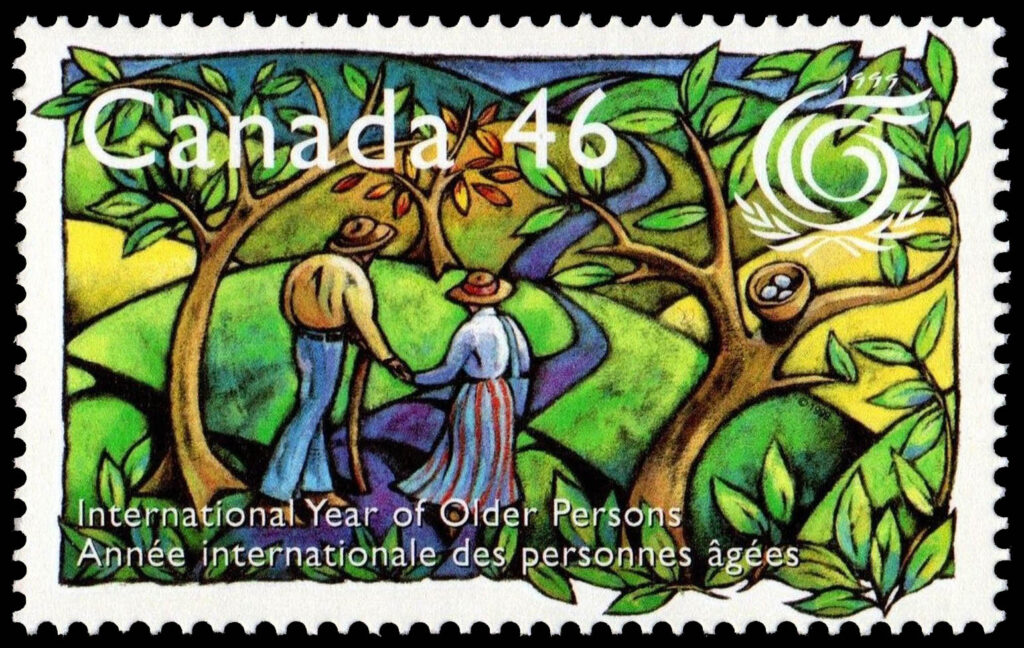
Image: A postage stamp issued by Canada in 1999 to commemorate the International Year of Older Persons.