Societies tend to celebrate visible leadership and great achievements, yet a great deal depends on quiet work done far from the spotlight. This parable, popularised by the American minister Peter Marshall, takes us to a village in the Austrian Alps, and shows what happens when the people who keep the water clean are no longer thought necessary. It gave Wellsprings its name.

“Keeper of the spring” is the story of a quiet forest dweller who lived high above an Austrian village along the eastern slope of the Alps.
The old gentleman had been hired many years earlier by a young town councilman to clear away the debris from the pools of water up in the mountain crevices that fed the lovely spring flowing through their town. With faithful, silent regularity, he patrolled the hills, removed the leaves and branches, and wiped away the silt that would otherwise have choked and contaminated the flow of fresh water.
The village soon became a popular attraction for vacationers. Graceful swans floated along the crystal clear spring, the mill wheels of various businesses located near the water turned day and night, farmlands were naturally irrigated, and the view from the restaurants was picturesque beyond description.
Years passed. One evening the town council met for its semi-annual meeting. As they reviewed the budget, one man’s eye caught the salary figure being paid to the obscure keeper of the spring. Said the keeper of the purse, “Who is the old man? Why do we keep him on year after year? No one ever sees him. For all we know, the strange ranger of the hills is doing us no good. He isn’t necessary any longer.” By a unanimous vote, they dispensed with the old man’s services.
For several weeks, nothing happened.
By early autumn, the trees began to shed their leaves. Small branches snapped off and fell into the pools, hindering the flow of sparkling water. One afternoon someone noticed a slight yellowish-brown tint in the spring. A few days later, the water was much darker. Within another week, a slimy film covered sections of the water along the banks, and a foul odor was soon detected. The mill wheels moved more slowly, some finally ground to a halt. Swans left, as did the tourists. Clammy fingers of disease and sickness reached deep into the village.
Quickly, the embarrassed council called a special meeting. Realising their gross error in judgment, they re-hired the old keeper of the spring, and within a few weeks, the veritable river of life began to clear up. The wheels started to turn, and new life returned to the hamlet in the Alps.
Image: A postage stamp issued by Austria in 2000, showing the village of Hallstatt, part of the Hallstatt-Dachstein/Salzkammergut Cultural Landscape, a UNESCO World Heritage Site since 1997. Courtesy: Stampolina, via Flickr.

Peter Marshall (1902–1949) was born in Scotland and emigrated to the United States in 1927. He became pastor of the New York Avenue Presbyterian Church in Washington, D.C., where his vivid, picture-filled sermons drew large congregations. In 1947 he was appointed Chaplain of the United States Senate. He died of a heart attack at forty-six. His wife, Catherine Marshall, told his story in the bestselling biography A Man Called Peter, which was also made into a film.
Read another anecdote of Dr. Peter Marshall at https://wellsprings.in/what-is-death-like/
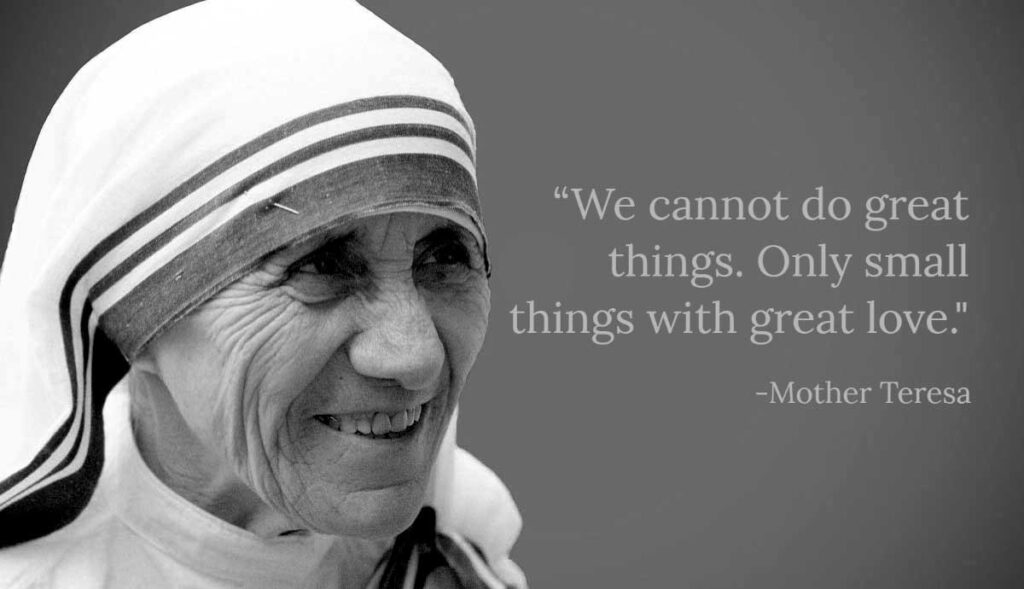
Never become discouraged with the seeming smallness of your task, job or life. The key to accomplishment is believing that what you do makes a difference.
“I am only one, but still I am one. I cannot do everything, but still I can do something; and because I cannot do everything, I will not refuse to do something I can do.”
Edward Everett Hale (1822-1909), American author, historian and Unitarian