In this dialogue from the Chuang Tzu, Lao Tzu turns our idea of leadership around. The highest kind of governing, he says, makes no noise. It follows the principle of wu-wei, effortless action, so that a ruler’s goodness reaches everyone so naturally that no one notices where it comes from.
Yang Tzŭ Chü went to see Lao Tzŭ, and said, “Suppose a man were ardent and courageous, acquainted with the order and principles of things, and untiring in the pursuit of Tao—would he be accounted a wise ruler?”
“From the point of view of a truly wise man,” replied Lao Tzŭ, “such a one would be a mere handicraftsman, wearing out body and mind alike. The tiger and the pard suffer from the beauty of their skins. The cleverness of the monkey, the tractability of the ox, bring them both to the tether. It is not on such grounds that a ruler may be accounted wise.”
“But in what, then,” cried Yang Tzŭ Chü, “does the government of a wise man consist?”
“The goodness of a wise ruler,” answered Lao Tzŭ, “covers the whole empire, yet he himself seems to know it not. It influences all creation, yet none is conscious thereof. It appears under countless forms, bringing joy to all things. It is based upon the baseless, and travels through the realms of Nowhere.”
What to take from it: the best leader is the one whose people feel they did it themselves.
Try this: if you lead anyone, even a family, a class or a small team, ask yourself whether your people need to notice you for things to go well. Then ask what you could do to make yourself a little less necessary.
And this: think of a good leader you have known. Ask what they did so quietly that you only noticed it later.
Source: From the Chuang Tzu, Chapter VII (“How to Govern”), translated by Herbert A. Giles (1889). Courtesy Project Gutenberg.
A note on the text
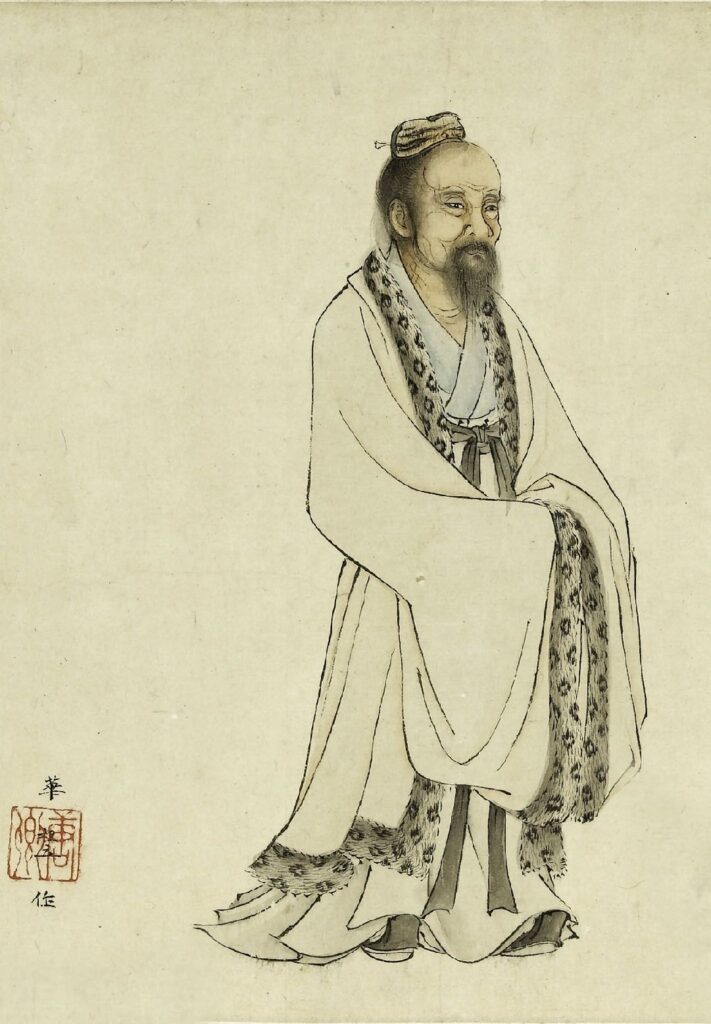
Chuang Tzu, also called Zhuang Zhou or Zhuangzi (“Master Zhuang”), was a Chinese philosopher who lived around the fourth century BC, in the age of the Hundred Schools of Thought. The book that bears his name, the Chuang Tzu, is one of the two founding texts of Taoism. Scholars believe he wrote part of it himself.
Image courtesy Hua Zili , Wikimedia Commons.
Taoism is a Chinese philosophy and religion built around living in harmony with the Tao, the “way.” It values effortless action, naturalness, simplicity and the “three treasures” of compassion, frugality and humility. It has shaped practices such as meditation, and it has influenced life well beyond China.
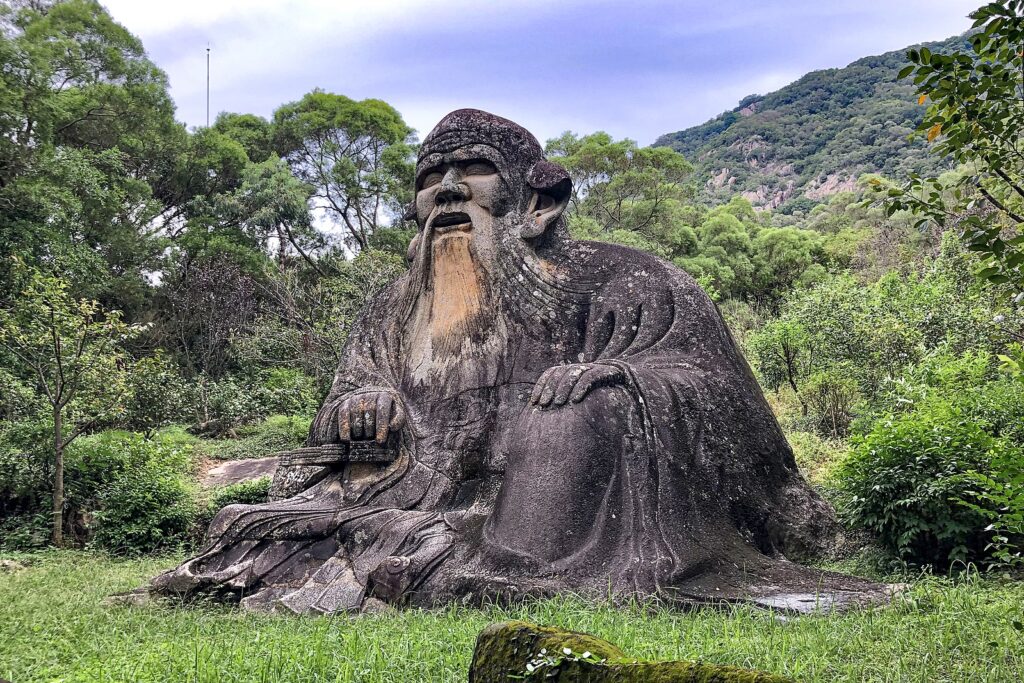
Lao Tzu, or Laozi, means “the Old Master.” He is a half-legendary figure, honoured in Chinese tradition as the founder of Taoism and the author of the Tao Te Ching. Whether he lived as a single historical person is uncertain, and in the Chuang Tzu he appears as a teacher in stories.
Image: Stone statue of Lao Tzu at Qingyuanshan in China.