
This captivating Sufi parable illuminates the difference between institutional religious dogma and direct spiritual realisation through Khwaja Moinuddin Chishti of Ajmer. By framing devotion as a living, internal melody rather than a rigid set of external societal regulations, the interaction illustrates a timeless truth: when an individual reaches the peak of genuine mystical alignment, their entire existence becomes a harmonious, uncontrollable prayer that transcends formal doctrine.
“I have heard a story. It happened in Ajmer… You must have heard about one Sufi mystic, Moinuddin Chishti, whose dargah, whose tomb, is in Ajmer.
Chishti was a great mystic, one of the greatest ever born, and he was a musician. To be a musician is to be against Islam because music is prohibited. He played on the sitar and on other instruments. He was a great musician and he enjoyed it. Five times every day, when a Mohammedan is required to pray the five ritual prayers, he wouldn’t pray, he would simply play on his instrument. That was his prayer. This was absolutely anti-religious but nobody could say anything to Chishti.
Many times people would come to tell him so and he would start singing, and the song would be so beautiful they would forget completely why they had come. He would start playing on his instrument and it would be so prayerful that even scholars and pundits and maulvis who had come to object, wouldn’t object. They would remember at home; when they were back at home they would remember why they had come.
Chisthi’s fame spread over the world. From every part of the world, people started coming. One man, Jilani, himself a great mystic, came from Baghdad just to see Chishti. When Chishti heard that Jilani was coming he felt, “To pay respect to Jilani it will not be good to play my instrument now. Because he is such an orthodox Mohammedan, it will not be a good welcome. He may feel hurt.”
So only for that day, in his whole life, he decided he would not play, he would not sing. He waited from morning and in the afternoon Jilani came. Chishti had hidden his instruments.
When Jilani came and they both sat in silence, the instruments started to make music — the whole room was filled. Chishti became very puzzled over what to do. He had hidden them, and such music he had never known before.
Jilani laughed and said, “Rules are not for you, you need not hide them. Rules are for ordinary people, rules are not for you — you should not hide them. How can you hide your soul? Your hands may not play, you may not sing from your throat, but your whole being is musical. And this whole room is filled with so much music, with so many vibrations that now the whole room is playing by itself.”
Osho in A Bird on the Wing
The legacy of the Saint of Ajmer
Khwaja Moinuddin Chishti remains one of the most revered and foundational figures in the history of Islamic mysticism, celebrated as the bringer of the Chishti Order to the Indian subcontinent. What made his approach uniquely transformative was his revolutionary use of Sama—sacred music and ecstatic singing—as a powerful vehicle for divine contemplation, effectively bridging religious divides by appealing to the universal human heart. Remembered affectionately as Gharib Nawaz (Comforter of the Poor), his achievements extended far beyond theological discourses; he established a sanctuary of radical egalitarianism where kings and beggars alike were served from the same communal kitchen. Today, centuries after his passing, his magnificent Dargah Sharif in Ajmer continues to stand as a luminous symbol of unity, attracting millions of pilgrims of all faiths who seek solace in the enduring melody of his universal love.
The spiritual musical gatherings of Ajmer
Ajmer is home to two globally renowned annual spiritual and artistic musical gatherings centred directly around the heritage of Khwaja Moinuddin Chishti. These events are completely unique because they treat music not as entertainment, but as the exact form of ecstatic prayer that the sufi saint intended.
The largest and most significant of these gatherings is the annual Ajmer Sharif Urs, a massive festival held over six to ten days to commemorate the saint’s death anniversary. Because it follows the Islamic lunar calendar, occurring during the seventh month of Rajab, the dates shift slightly every year. During this sacred period, the entire Dargah complex transforms into a magnificent, night-long stadium for Qawwali, the devotional music of Sufism. The world’s finest and most legendary Qawwals gather in the Mehfil-e-Sama Khana (the spiritual audition hall) and surrounding courtyards, filling the air with intense, ecstatic musical rhythms, harmoniums and synchronised hand-clapping that last until dawn.
Complementing this ancient tradition is the International Sufi Rang Festival, an annual week-long cultural event organised by the Ajmer-based Chishty Foundation. This festival acts as a modern bridge, bringing together spiritual musicians, calligraphers and visual artists from up to forty different countries. Alongside sacred art exhibitions, the nights are dedicated to live musical renditions, Sufi poetry readings, and the revival of ancient Indian classical traditions like 15th-century Dhrupad singing. The festival’s inclusive and artistic nature frequently draws prominent filmmakers, classical masters, and Bollywood musicians to perform alongside traditional mystics.
On the final day of the Urs, during a unique ceremony called Badhaawa, a specific song of praise composed by an early ancestor of the Chishti order is recited entirely without a single musical instrument, relying only on the booming, rhythmic clapping of thousands of hands. Just like the conclusion of the parable, the physical instruments are put away, yet the music continues to vibrate through the crowd.
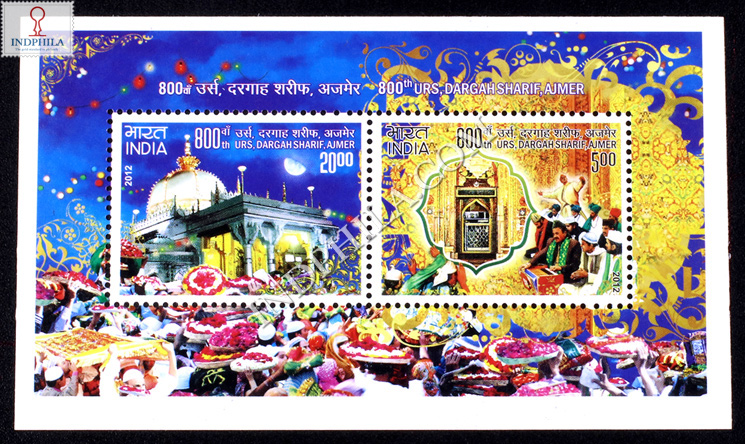
Image: India commemorative postage stamps issued in 2012 on the occasion of the 800th Urs of Khwaja Moinuddin Chishti at Dargah Sharif, Ajmer. His tomb is one of the most important religious sites in Sufism.
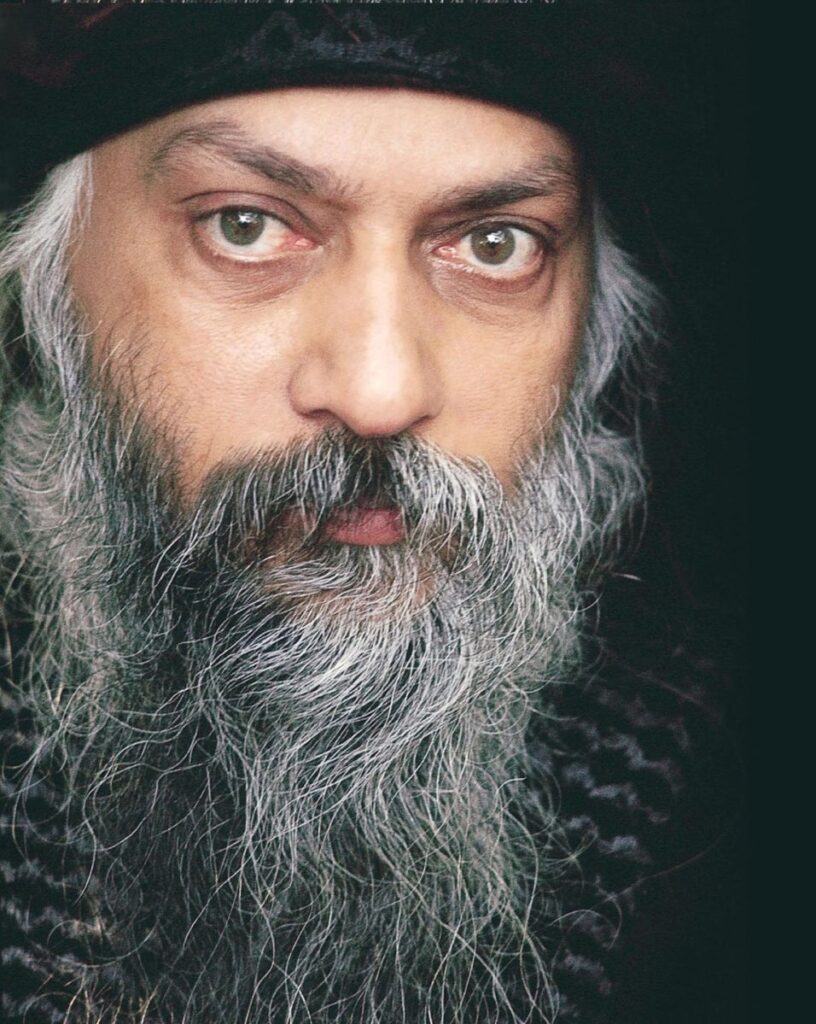
Acharya Rajneesh (1931-1990), known later as Osho, was an Indian godman, philosopher, mystic and founder of the Rajneesh movement. He was viewed as a controversial religious leader during his life. He rejected institutional religions, insisting that spiritual experience could not be organised into any one system of religious dogma. He advocated meditation and taught a unique form called dynamic meditation. Rejecting traditional ascetic practices, he asked his followers to live fully in the world but without attachment to it. Pic courtesy: https://www.sannyas.wiki