
Human minds are heavily conditioned by language, books, and external teachings, creating a layer of concepts that dictates how reality is perceived. This short reflection dives into the profound tension between intellectual study and direct realisation, examining how our heavy reliance on external knowledge shapes our inner world. Ultimately, it prompts us to reflect on a subtle cognitive trap—challenging the stubborn assumption that we can skip the necessary scaffolding of external learning before achieving genuine, unmediated insight.
“This interchange between the Sufi mystic, Simab, and a nobleman named Mulakab, is a dialogue often preserved in oral transmission staged by wandering dervishes.
Mulakab: “Tell me something of your philosophy so that I may understand.”
Simab: “You cannot understand unless you have experience.”
Mulakab: “I do not have to understand a cake to know whether it is bad.”
Simab: “If you are looking at a good fish and you think that it is a bad cake, you need to understand it better, more than you need anything else.”
Mulakab: “Then why do you not abandon books and lectures if experience is a necessity?”
Simab: “Because the outward is the conductor to the inward. Books will teach you something of the outward aspects of the inward, and so will lectures. Without them, you will make no progress.”
Mulakab: “But why should we not be able to do so without books?”
Simab: “For the same reason that you cannot think without words. You have been reared on books; your mind is so altered by books and lectures, by hearing and speaking, that the inward can only speak to you through the outward. Otherwise, you will only perceive what you pretend to perceive.”
Mulakab: “Does this apply to everyone?”
Simab: “It applies to whom it applies. It applies above all to those who think it does not apply to them!”
Osho (Acharya Rajneesh) in the book Sufis: The People of the Path Vol. 2
Simab is a traditional figure in Sufi teaching stories whose interactions serve as allegorical lessons to expose human ego and intellectual pride. Often depicted in dialogues preserved through dervish oral traditions, his character symbolises the sharp, uncompromising clarity of direct spiritual experience over dry academic knowledge.
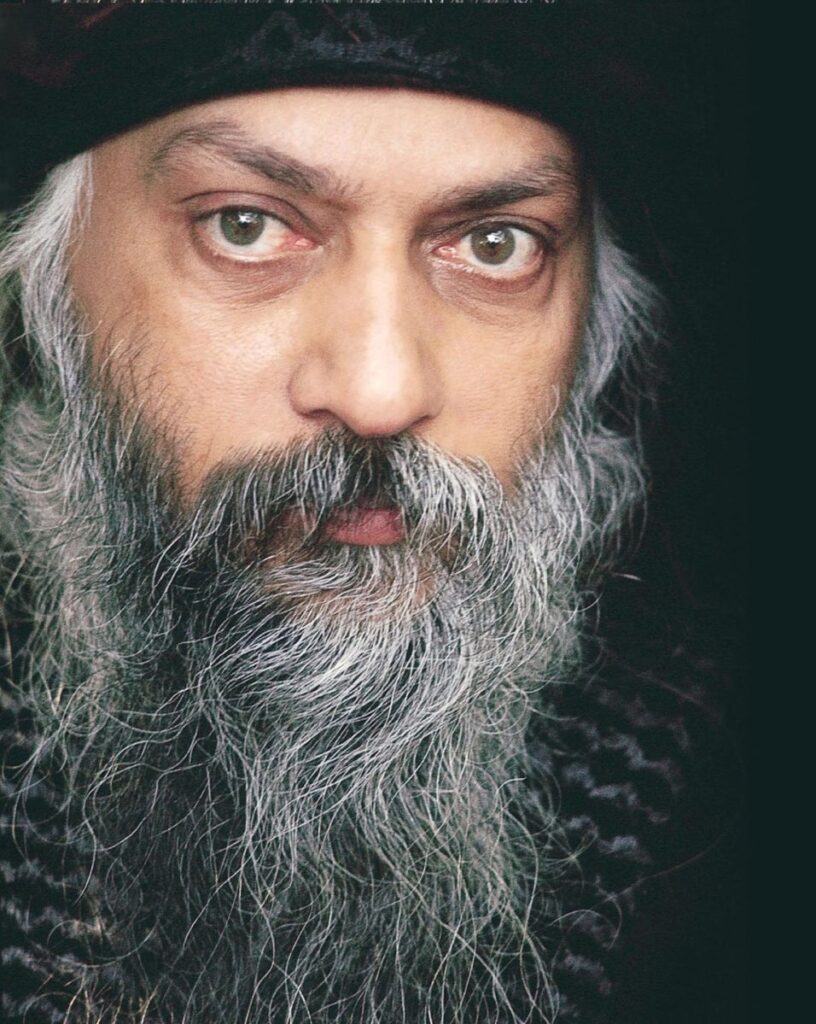
Acharya Rajneesh (1931-1990), known later as Osho, was an Indian godman, philosopher, mystic and founder of the Rajneesh movement. He was viewed as a controversial religious leader during his life. He rejected institutional religions, insisting that spiritual experience could not be organised into any one system of religious dogma. He advocated meditation and taught a unique form called dynamic meditation. Rejecting traditional ascetic practices, he asked his followers to live fully in the world but without attachment to it. Pic courtesy: https://www.sannyas.wiki/