
Mastery demands uncompromising standards; ultimate success belongs to those who value excellence over immediate demand.
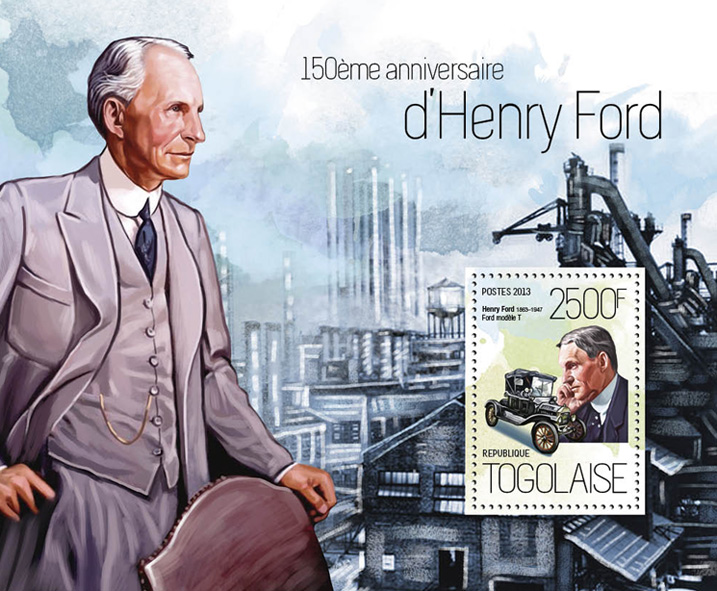
Henry Ford dropped out of school at the age of 15. He walked from his family’s farm in Dearborn, Michigan, to Detroit, and found work in a machine shop. He would eventually revolutionise the world with his mass-produced Model T car, which at $500 made the automobile affordable for the average citizen.
But in his early years, he lost his financial backers. His investors were impatient to put a car on the market, but Ford refused, insisting “always on improving whatever model he was working on, saying that it was not yet ready for customers.”
By the time he got around to forming the Ford Motor Company (in 1903), it was “with a mere $28,000… put up by ordinary citizens” — “the wealthiest men in Detroit” had given up on him.
But the customers rewarded him. He sold almost 17 million Model Ts, and became one of the richest men in the world.
Reference: The Encyclopedia Britannica, Volume 19, 2002, “Henry Ford,” pp. 407-409; The Encyclopedia Britannica, Volume 4, 2002, “Henry Ford,” p. 876
Image: A 2013 souvenir sheet issued by the Republic of Togo (République Togolaise) commemorating the 150th birth anniversary of Henry Ford (1863–1947). Courtesy: http://togo.post-stamps.com
The innovations and global legacy of Henry Ford (Oct. 2026 update)
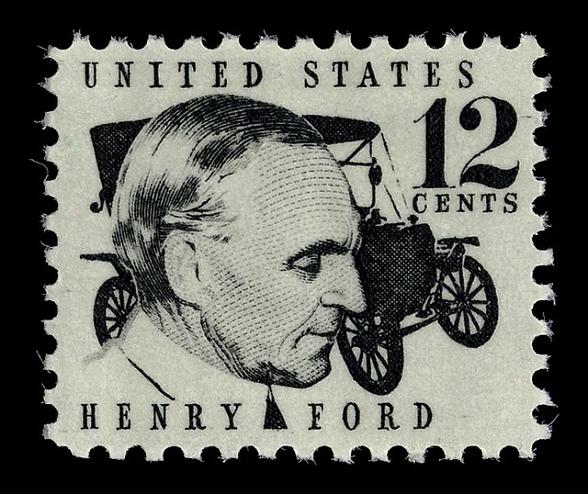
Driven by an obsession with continuous improvement, Henry Ford introduced manufacturing breakthroughs that completely revolutionised modern industry. In 1913, inspired by automated processing systems in flour mills and meatpacking plants, he debuted the moving assembly line, cutting the time to build a Model T from 12 hours to just 93 minutes. He famously restricted vehicle finishes to black paint (specifically Japan Black) because it was the cheapest option and possessed the fastest drying time, keeping the continuous lines running without bottlenecks. The following year, Ford launched the “$5-a-day revolution,” doubling his workers’ wages while reducing shift lengths—a move that eliminated costly turnover and enabled assembly line employees to purchase the very cars they built.
Over a century later, the company he founded with just $28,000 has evolved into a global automotive titan. Beyond its home market in North America—where Ford commands a 13% to 14% market share driven by the F-Series, America’s best-selling truck for nearly half a century—Ford is a major international force. The company generates tens of billions of dollars across Europe, the UK, Australia and Latin America, supplying commercial vans and heavy-duty utility vehicles tailored to local economies. Henry Ford’s uncompromising commitment to efficiency and accessibility established a legacy that continues to move the world.
Image: The Henry Ford postage stamp was issued in1968 as part of the Prominent Americans series. It features a portrait of Henry Ford and his 1909 Model T. Courtesy National Postal Museum, USA.