
Courage is never measured by the absence of danger, but by the quiet resolve to stand in harm’s way so that others may live without fear.

In Churchill’s Memoirs of The Second World War, he tells the story of the unexploded bomb squads, or U.X.B squads.
During the bombardment of England, the Nazis dropped large numbers of delayed-action bombs. These bombs weren’t meant to explode on contact, but to land and serve as a kind of mine — to cause uncertainty and paralyse action. The bombs had to be dug up and exploded, or defused.
That’s where the U.X.B. squads came in. They were volunteers in the various cities, towns and districts who took this dangerous job upon themselves. Churchill said, “Some survived…Others ran twenty, thirty, or even forty courses before they met their fate.”
He tells of one team that consisted of “the Earl of Suffolk, his lady private secretary, and his rather aged chauffeur. They called themselves ‘the Holy Trinity.’” They tackled 34 bombs effectively, “with urbane and smiling efficiency,” Churchill wrote. But the 35th took their lives.
Sometimes doing the right thing is costly.
Reference: Winston S. Churchill, Memoirs of The Second World War, abridgement (Houghton Mifflin Company, 1959), pp. 373-374
Image: A Royal Mail com memorative postage stamp issued in 2010, as part of the “Britain Alone” collection. The stamp features wartime Prime Minister Sir Winston Churchill walking with a walking stick while inspecting British troops. Courtesy: http://commonwealthstampsopinion.blogspot.com/
The hero behind “the holy trinity”
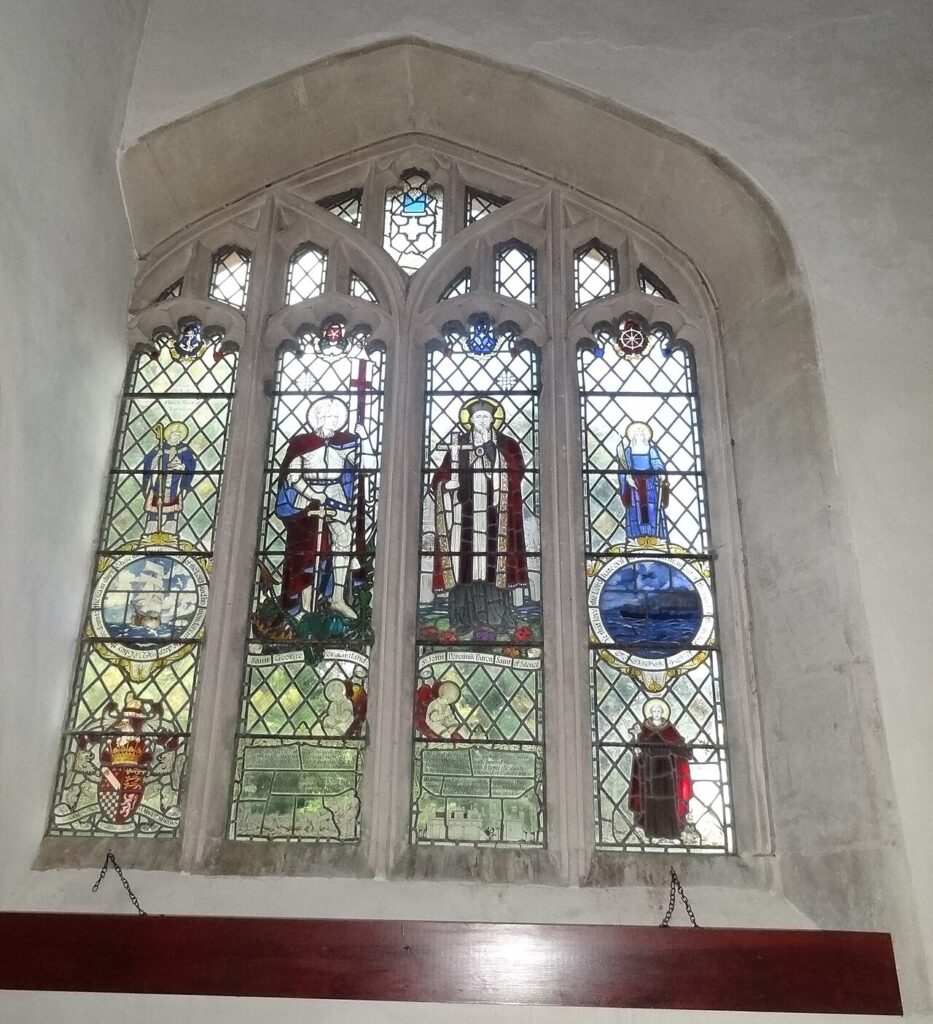
Charles Howard, the 20th Earl of Suffolk, formed the legendary Bomb Disposal unit alongside his private secretary, Eileen Morden, and his chauffeur, Fred Hards. Prior to their bomb disposal efforts, the Earl had engineered a daring escape from falling France in June 1940, rescuing 33 elite nuclear scientists, $10 million in industrial diamonds, and the entire global stockpile of heavy water to keep them out of enemy hands.
Their tragic end on May 12, 1941, while working on Erith Marshes, occurred when a bomb fitted with a hidden booby-trap fuse detonated. Following his sacrifice, the Earl was posthumously awarded the George Cross, Britain’s highest civilian bravery decoration, and a stained-glass memorial window honouring the trio was installed in St. John the Baptist Church in Charlton, Wiltshire. His extraordinary life later inspired the character Lord Suffolk in Michael Ondaatje’s novel The English Patient as well as the acclaimed BBC drama series Danger UXB.