
Overanalysing every detail often creates complex obstacles where simple clarity should prevail. The mind’s tendency to build elaborate mental theories can easily obscure the most straightforward paths in life. Simple Thinking reminds us of the profound value of unburdened perception and uncluttered reasoning.
“A certain man who was fond of studying all kinds of systems of thought wrote to a Dervish Master, Abdul-Aziz of Mecca, asking whether he could talk to him in order to make comparisons.
The Dervish sent him a bottle with oil and water in it, and a piece of cotton wick. Enclosed in the pack- age was this letter:
Dear friend, if you place the wick in the oil, you will get light when fire is applied to it. If you pour out the oil and put the wick in the water, you will get no light. If you shake up the oil and water and then place the wick in them, you will get a spluttering and a going out. There is no need to carry out this experiment through words and visits when it can be done with such simple materials as these.”
Osho (Acharya Rajneesh) in the book Sufis: People of the Path
Dervish in Islam can refer broadly to members of a Sufi fraternity (tariqah), or more narrowly to a religious mendicant, who chose or accepted material poverty.
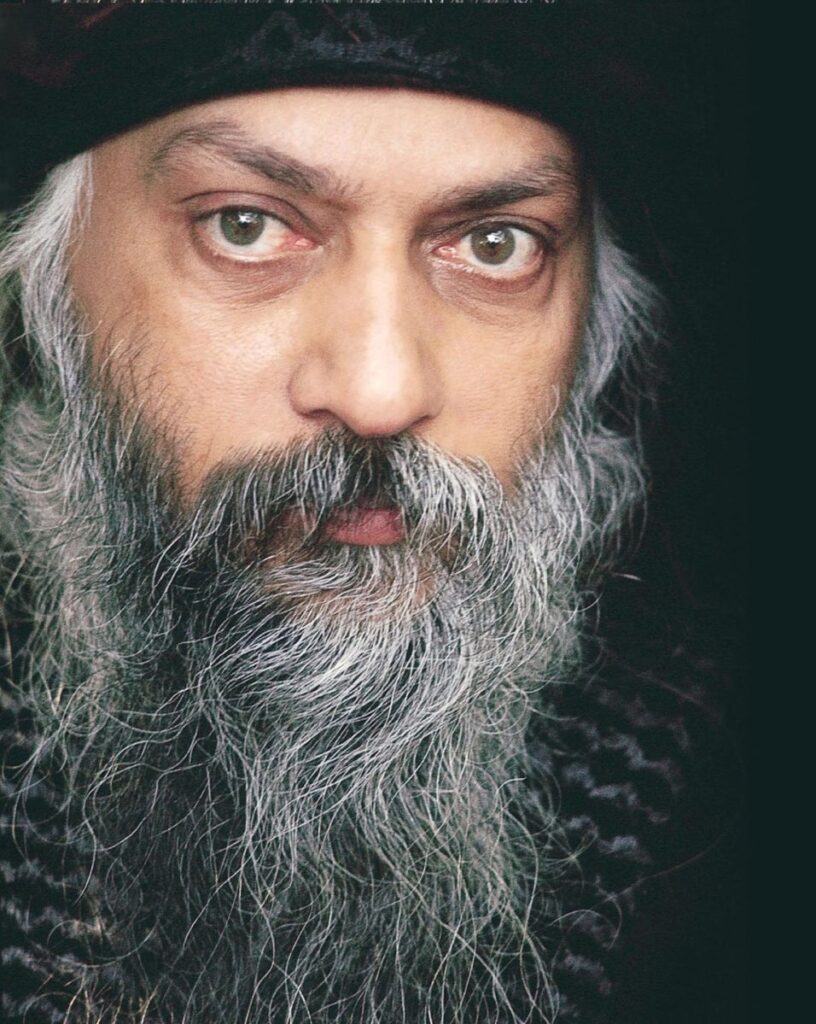
Acharya Rajneesh (1931-1990), known later as Osho, was an Indian godman, philosopher, mystic and founder of the Rajneesh movement. He was viewed as a controversial religious leader during his life. He rejected institutional religions, insisting that spiritual experience could not be organised into any one system of religious dogma. He advocated meditation and taught a unique form called dynamic meditation. Rejecting traditional ascetic practices, he asked his followers to live fully in the world but without attachment to it. Pic courtesy: https://www.sannyas.wiki/