
How will you describe a scientist-inventor who possessed a rare natural gift that allowed him to build, test and run complex machinery entirely within his own mind? He was none other than Nikola Tesla (1856–1943), a Serbian-American engineer, futurist and inventor, and the incredible talent he had is called hyper-phantasia, in scientific parlance.
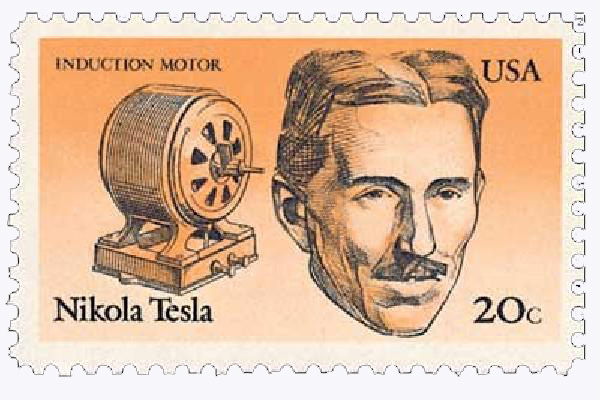
Unlike other inventors of his time, Nikola Tesla rarely drew physical blueprints or built physical prototypes before creating a final product. Instead, he conceived complete three-dimensional machines purely in his imagination, bypassing the traditional engineering drafting process. To test his designs, Tesla would mentally “turn on” his imaginary machines and let them run for weeks at a time in his mind. He would later inspect the imaginary parts to see which components showed signs of friction or wear.
Because of this flawless mental execution, when he finally manufactured the physical invention, it worked exactly as he had imagined, a gift that allowed him to design the Alternating Current (AC) electrical system without ever putting pen to paper first.
While Nikola Tesla is most famous for developing the modern AC motor and the Tesla Coil, he held roughly 300 patents globally for a wide array of groundbreaking technologies. Many of his secondary creations laid the direct groundwork for modern devices like smartphones, televisions, and robotics. His practical mastery of high-frequency currents led to the creation of the induction motor, early radio components, and wireless control systems. By proving the efficiency of AC over Thomas Edison’s Direct Current (DC) during the famous “War of the Currents,” Tesla fundamentally re-engineered how humanity generates and consumes electrical power.
Origins, education and qualifications
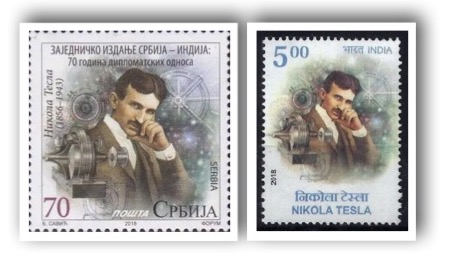
Born in 1856 in the village of Smiljan (modern-day Croatia), Nikola Tesla was raised in a Serbian Orthodox family, inheriting a sharp inventive streak from his mother and a disciplined intellect from his clergyman father. He received a rigorous early education at the Higher Real Gymnasium in Karlovac, where his extraordinary ability to perform integral calculus in his head led his teachers to suspect him of cheating.
Tesla later pursued advanced engineering and physics at the Austrian Polytechnic in Graz, dedicating himself to near-obsessive study and first conceptualising his alternating current ideas during a physics lecture. Though he never formally graduated from Graz or his subsequent studies at the Charles-Ferdinand University in Prague due to financial strain, his profound self-taught mastery of mathematics, electrical engineering, and multiple languages provided a qualification far exceeding any formal academic degree.
Hardship, rivalry, and financial ruin
Despite his profound mental capabilities, Tesla’s life story was marked by financial hardship and professional rivalry. His unwavering commitment to idealistic projects often came at the expense of commercial success. After famously tearing up his lucrative AC royalty contract with George Westinghouse to save the Westinghouse Electric Company from bankruptcy, Tesla frequently found himself underfunded. His ambitious Wardenclyffe Tower project, intended to provide free wireless power to the world, collapsed when the financier withdrew funding. This setback plunged Tesla into financial ruin and social isolation, forcing him to spend his final decades living in a series of New York hotels, where he passed away nearly penniless.
Visionary genius and prophetic foresight
The true genius of Tesla extended far beyond his practical engineering marvels; it lay in his radical, prophetic vision of the future. Long before the technology existed to support them, Tesla conceptualised a global wireless communications network that accurately predicted the modern internet and smartphones. He envisioned a world powered entirely by clean, renewable energy harnessed from natural forces like waterfalls and cosmic rays. This ability to think decades—and sometimes centuries—ahead of his contemporaries cemented his status as a visionary who saw science not as a tool for personal wealth, but as a vehicle for the collective advancement of humanity.
Modern renaissance and lasting legacy
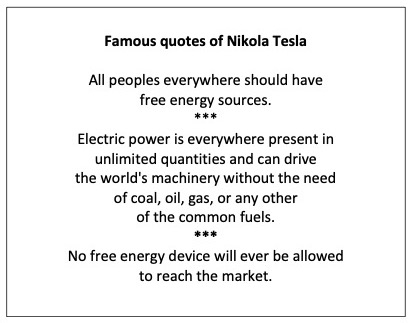
Today, Nikola Tesla’s legacy has experienced a massive cultural and scientific renaissance. Once a forgotten figure overshadowed by Thomas Edison in history textbooks, he is now celebrated worldwide as the ultimate icon of innovation and the archetype of the brilliant, uncompromising inventor. His name has become synonymous with cutting-edge technology, lending itself to the world’s leading electric vehicle manufacturer and the standard scientific unit for magnetic flux density. Ultimately, the modern world runs on the very invisible grid of alternating current and wireless frequencies that Tesla first ran through the theatre of his own mind.
Did You Know?
- Nikola Tesla deeply loved a specific white female pigeon, claiming their bond gave his life purpose until she died in his New York hotel room.
- In 1898, Tesla’s mechanical oscillator test caused a localised earthquake in his Manhattan neighbourhood, forcing him to destroy the device with a sledgehammer.
- Tesla exhibited extreme OCD, including a fear of pearls, walking around blocks three times, and requiring 18 napkins for dining.
- Claiming only two hours of sleep, Tesla often worked for 84 hours straight, with university professors warning his habits were dangerous.