
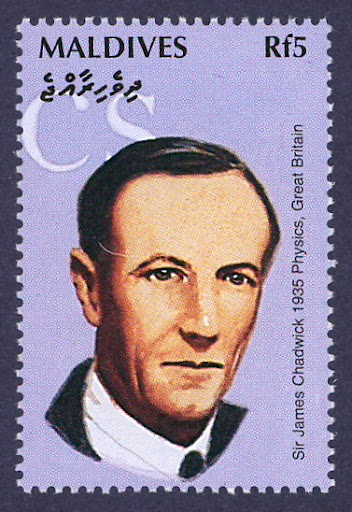
Human history was completely altered by a simple act of teenage shyness at a university registration desk in 1908. James Chadwick originally intended to study mathematics, but he accidentally enrolled in physics because he was too timid to correct the registrar. This twist of fate set off a remarkable journey: from operating a makeshift stable laboratory while imprisoned in a World War I civilian camp to solving the decade-long riddle of why atoms weighed more than they should. In 1932, Chadwick successfully isolated the neutron, handing humanity the uncharged key that could effortlessly penetrate and split the heaviest atoms on Earth.
“He was sixteen years old and he had come to Manchester with one plan: study mathematics. But when he arrived at the university registration desk in 1908, a physicist was sitting there instead of a mathematician. James Chadwick was too shy to correct the assumption. He signed up for physics and walked away not knowing he had just altered the course of human history.
He was brilliant at it. He studied under Ernest Rutherford — the most celebrated experimental physicist of the era — and graduated with honors in 1911. By 1913, he had his master’s degree and had won a prestigious scholarship to study in Berlin under Hans Geiger. Then the world fell apart. When war broke out in August 1914, Chadwick was a young British scientist on German soil. He was detained immediately and spent the next four years confined at the Ruhleben civilian camp outside Berlin. He did not stop doing science. With help from sympathetic guards and fellow imprisoned scientists, he set up a small laboratory in the camp’s stables and continued his experiments through the boredom, the uncertainty, and the years that refused to end.
He came home in 1919 with his curiosity intact and his patience sharpened into something quieter and harder than before. He rejoined Rutherford at Cambridge, earned his doctorate in 1921, and spent the next decade working on a puzzle that had frustrated science for years: atoms weighed more than they should.
Something neutral, something invisible to every detection method then known, had to be hiding inside them. In early 1932, a French team published results from an experiment that had unknowingly captured that particle — but they misread what they were seeing. Chadwick read their paper and knew the numbers were wrong. He repeated the experiment himself, measured carefully, and within roughly three weeks of relentless work, confirmed what no one had managed to prove before: a particle with the mass of a proton and no electric charge at all. He published his findings in a letter to Nature titled, with characteristic understatement, “Possible Existence of a Neutron.” He had found it.
The Nobel Committee awarded him the Prize in Physics in 1935. But what Chadwick had actually handed the world was not just a new particle — it was a key. Because the neutron carried no electric charge, it could not be deflected by the positive force at the core of any atom. It could go straight in. It could split the heaviest atoms on earth and release everything locked inside them. When he eventually understood where that led — after writing the 1941 MAUD Report concluding that an atomic weapon was not only possible but inevitable — he later wrote: “I had then to start taking sleeping pills. It was the only remedy.” He took them. He kept working. He led the British team into the Manhattan Project, stood in the New Mexico desert in July 1945 and watched the Trinity test detonate, then came home to Cambridge and lived quietly for nearly three more decades. He had found a particle in a stable. He had not been looking for anything more than an answer to why atoms weigh what they weigh. The rest, as he understood better than almost anyone, followed inevitably — and he carried that knowledge for the rest of his life.”
Courtesy Discovery Timelines Facebook page.
Image of postage stamp courtesy Science on Stamps website.