How hidden ripples of sound, light, heat and gravity shape our everyday world.
While you sit reading these words in an apparently still room, your body is quietly being traversed by a dense mix of cosmic, terrestrial and artificial radiation, an unseen choreography unfolding all around you. Rather than relying on dry textbook formulas alone, this guide invites you to gently map the invisible forces shaping our immediate environment. From everyday wireless signals to planetary shields that protect life from harmful space radiation, from the physics of heat generation to the imaging technologies that transform modern medicine, this essay offers a glimpse of how waves help explain many parts of the physical world.
The hidden grammar of the universe
On a rainy evening, the physical environment quietly displays wave behaviour in multiple concurrent forms: the impact of raindrops creates ripples on a windowsill; the compression from a distant thunderclap reaches the ears; and high-frequency radio signals carrying mobile data fluctuate across space. A wave is a physical disturbance that moves through space and time, transferring energy from one place to another without wholesale transport of matter—a subtle pattern rather than a marching army of particles. The wave pattern propagates outward, while the individual components of the carrying medium remain largely near their original positions.
For much of history, different types of waves were studied separately, as if nature were speaking in unrelated dialects. The mechanics of the ocean, the vibration of a plucked string, and the refraction of light were treated as distinct phenomena. The unification of these ideas began with experiments by physicists like Thomas Young of Britain, who in 1800 demonstrated the wave nature of light through interference and diffraction, showing that light waves can reinforce and cancel one another much like ripples in water.
The mechanical picture expanded dramatically with the discovery of electromagnetism. In 1820, Danish chemist and physicist Hans Christian Oersted demonstrated that an electrical current passing through a wire deflected a nearby magnetic compass needle, showing that moving electricity generates a magnetic field. In 1831, English chemist and physicist Michael Faraday showed the reverse relationship: a changing magnetic field can induce an electrical current in a coil of wire.
1
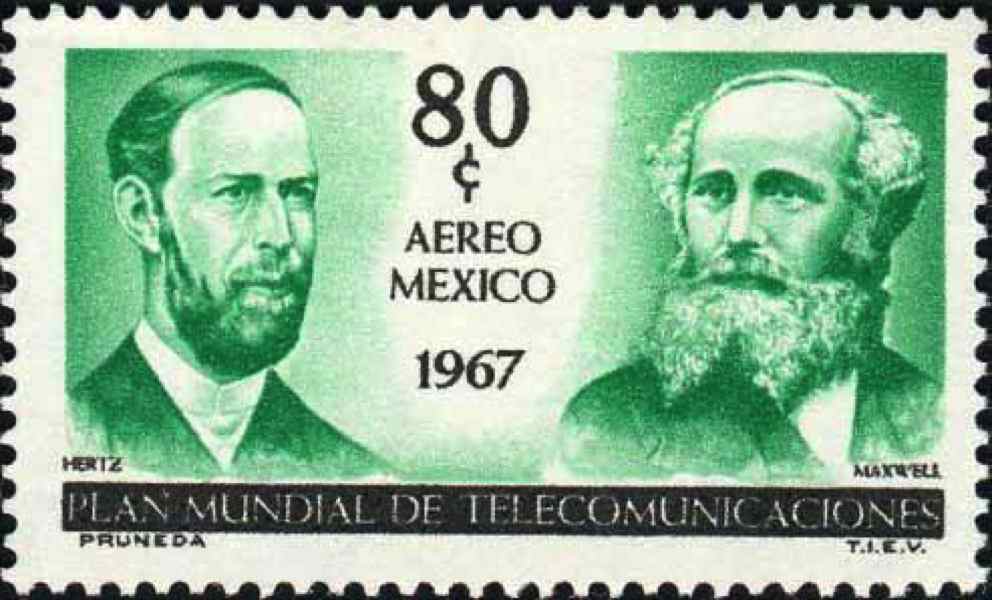
Scottish physicist James Clerk Maxwell mathematically unified these observations into a set of four governing equations during the 1860s. Maxwell’s equations describe the production and interrelation of electric and magnetic fields, and they predict that changing electric and magnetic fields can generate one another and travel through space as electromagnetic waves. His calculations showed that the velocity of these waves matched the known speed of light, leading to the astonishing conclusion that visible light is only a narrow sliver of a much broader electromagnetic spectrum, most of which we will never see directly.
2
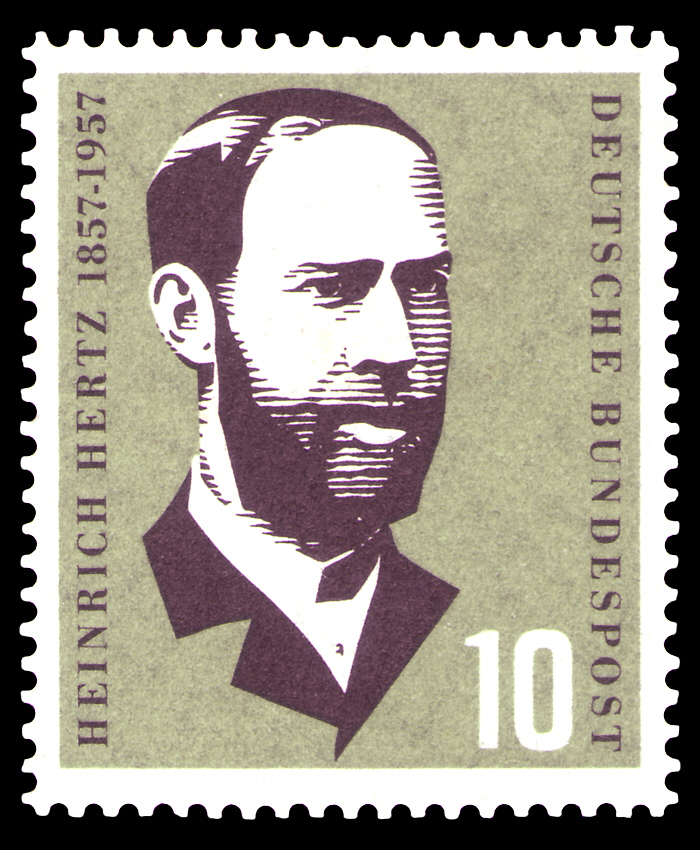
During 1886-88, at Karlsruhe Technical University, German physicist Heinrich Hertz constructed an electrical apparatus with an induction coil and a spark gap to test Maxwell’s predictions. When a high-voltage spark discharged across the primary gap, Hertz observed a tiny secondary spark in a separate wire loop nearby. Because no physical cable connected the two circuits, the experiment showed that energy had travelled across the room as an invisible electromagnetic wave. This was the first direct experimental confirmation of Maxwell’s theory and the birth of practical radio-wave technology.
To systematically classify these energy fields, modern physics organises waves into two broad families: mechanical waves, which require a material medium to travel through, and electromagnetic waves, which can propagate through a vacuum.
The sub-surface illusion: Mechanical waves
To understand mechanical waves, one must analyse the behaviour of the carrying medium at a molecular level. When a wave rolls across the surface of the ocean, the water molecules do not move straight towards the shore. If a floating object is placed in the water, it bobs up and down, tracing a tight circular orbit before returning to its baseline position. The individual water molecules merely pass kinetic energy to adjacent molecules; the energy pattern can travel thousands of miles across the ocean while the matter itself stays almost where it began, like a stadium wave rolling through seated spectators.
Sound operates on a similar mechanical principle of energy transfer. A vibration, whether from a tuning fork, a vocal cord, or an explosion, imparts energy to surrounding air molecules. This oscillation creates sequential pulses of high density (compressions) and low density (rarefactions) that push air molecules forward and backward. Just like water molecules, the air molecules themselves do not travel from the source of the sound to the listener’s ear; rather, they collide with nearby molecules and pass the disturbance along. Because sound depends on the properties of the medium, its speed changes with its state, temperature and density—a reminder that even ‘silence’ is full of finely tuned motion. In air, sound travels at about 343 metres per second, while in a dense solid such as steel it travels much faster, often above 5,000 metres per second depending on the material.
3
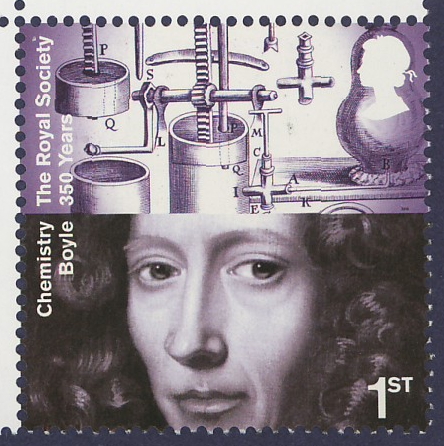
Because mechanical waves require physical matter to travel, they cannot propagate in a vacuum. Irish natural philosopher and chemist Robert Boyle and later experimenters demonstrated that sound weakens as air is removed from a vessel, helping establish that acoustic waves need a material medium.
The quantum exception
Unlike sound or water waves, light does not require a material medium to travel; it is electromagnetic radiation that can be described both as a wave and as particles called photons, inhabiting a dual identity that continues to puzzle and inspire physicists. It can propagate through a vacuum, travelling across the vast emptiness of space.
As revealed by the breakthroughs of twentieth‑century physics, light possesses a wave‑particle duality, behaving simultaneously as a continuous electromagnetic wave and a stream of localised particles. The visible light captured by the human eye represents a minute fraction of the vast electromagnetic spectrum. The entire spectrum is organised mathematically by wavelength, the distance between two successive wave peaks, and frequency, the number of wave peaks passing a fixed point per second, governed by the basic wave equation that says: velocity equals frequency multiplied by wavelength. In vacuum, all electromagnetic waves share the same velocity: the speed of light.
The discoveries of the EM spectrum
The discovery of the boundaries of the electromagnetic spectrum invisible to the human eye occurred via a series of precise physical experiments throughout the nineteenth and early twentieth centuries.
4
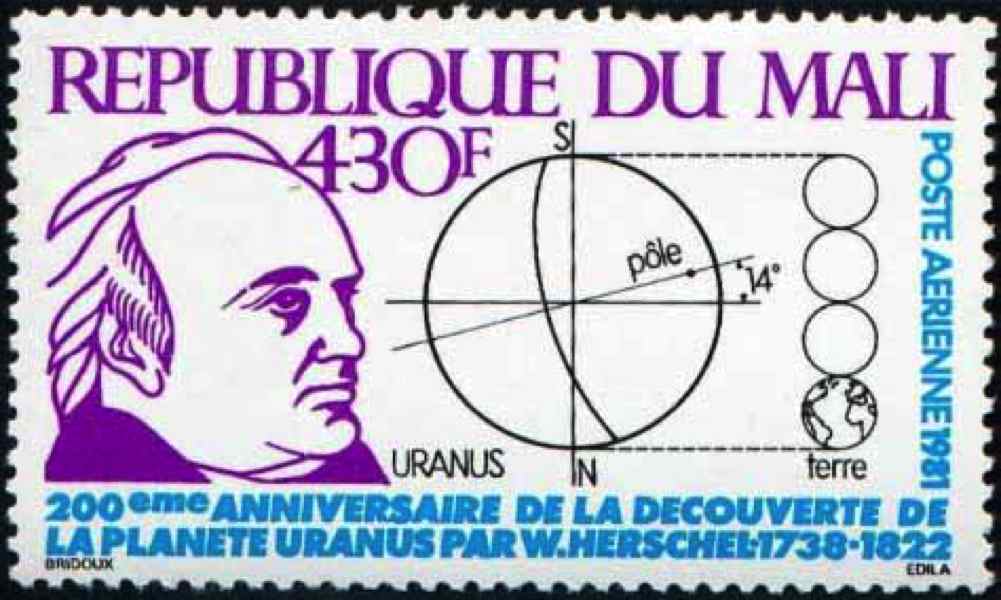
In 1800, British astronomer Sir William Herschel passed sunlight through a prism to separate it into its component colours and placed thermometers in each colour band to measure their thermal energy. Out of quiet curiosity, he placed a control thermometer just beyond the visible red edge in what seemed like total darkness. The thermometer in the dark zone registered the highest temperature rise of all, discovering “calorific rays” known today as infrared radiation.
In 1801, German physicist Johann Wilhelm Ritter investigated the opposite end of the spectrum. He exposed paper soaked in silver chloride to the dark area located just beyond the visible violet edge. The chemical darkened rapidly in the invisible zone, proving the existence of high-frequency ultraviolet rays.
5
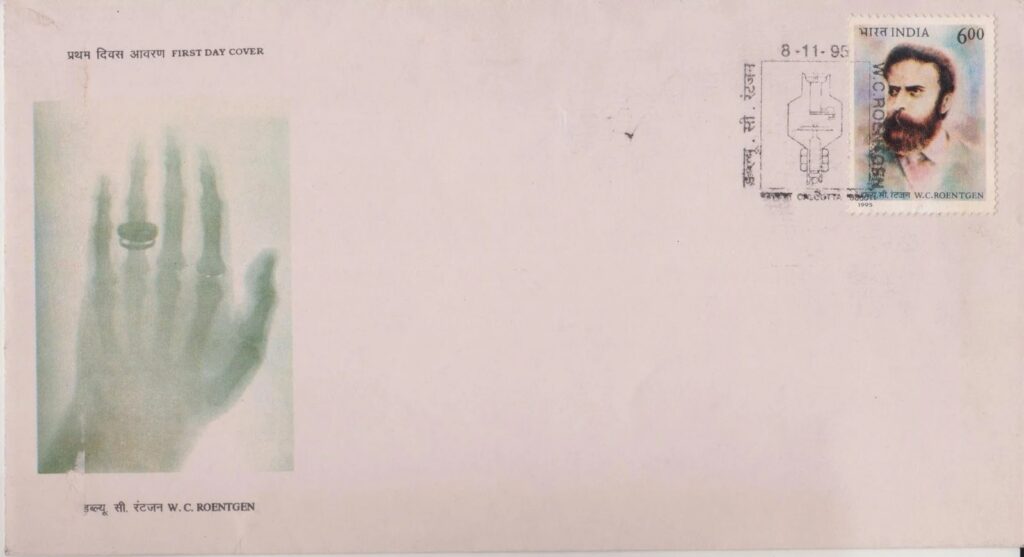
In 1895, another German physicist Wilhelm Röntgen observed a nearby chemically coated barium screen fluorescing in his dark lab while operating an electrical current inside a high-vacuum tube, despite the tube being wrapped in thick black cardboard. He deduced that a highly penetrating, unknown wave was passing through the solid cardboard. He used these new X-rays to capture the first radiographic image of the internal skeletal structure of a human hand (his wife’s!).
In 1900, French physicist Paul Villard discovered gamma rays while studying the radiation emitted by the radioactive decay of radium. He noted that they were far more penetrating than alpha or beta particles released from unstable atoms, and capable of passing through thick sheets of lead, marking the highest‑frequency boundary of the known spectrum, at the very edge of what our instruments could then perceive.
To classify how these various bands of the electromagnetic spectrum interact with matter, physics divides the continuum into non-ionising radiation, such as radio waves, microwaves, infrared and visible light, and ionising radiation, such as X-rays and gamma rays. Non-ionising radiation can heat matter or stimulate motion in atoms and molecules, while ionising radiation can remove electrons from atoms and cause molecular damage. This division explains why the gentle warmth from a campfire feels familiar and generally safe at a distance, whereas excessive X‑ray or gamma exposure can harm living tissue deep within.
The alchemy of heat and fire
From a chemical perspective, fire is not a material object in itself; it is a rapid exothermic oxidation reaction that emits electromagnetic radiation. When fuel burns, thermal energy excites electrons and atoms, and as those particles relax back to lower energy states, they release energy into the environment. A standard fire produces visible light, which we see as flames, and infrared radiation, which we feel as heat.
Heat energy transfers through three main mechanisms: conduction, convection and radiation. In conduction, thermal energy passes through a material by local collisions and vibrations among particles. In convection, heating causes fluid to move, with warm, less dense regions rising and cooler, denser regions sinking. In radiation, energy travels as electromagnetic waves. Even across space, a heat source can transfer energy directly through infrared radiation, which is absorbed by skin or other matter and converted into thermal motion.
Every object with a temperature above absolute zero emits electromagnetic radiation. Human bodies constantly emit invisible infrared radiation into their surroundings. As an object gets hotter, the wavelength of the radiation it emits shifts toward shorter values, and at sufficiently high temperatures an object such as iron can glow red, orange and eventually white, as if matter were briefly turning into visible music.
The tech mesh: Waves at home
Modern domestic spaces are continually filled with artificial electromagnetic waves used for communication.
6
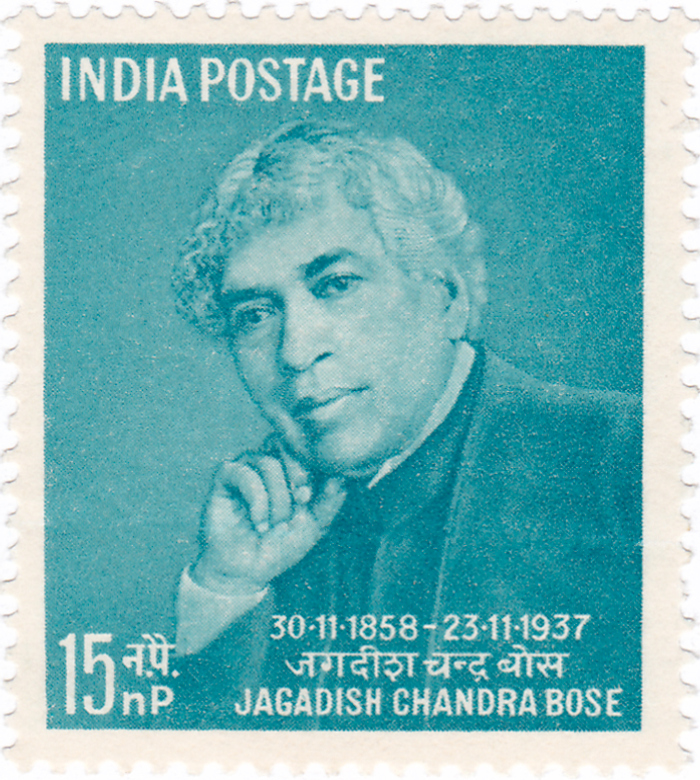
Cellular networks: Mobile devices exchange data with cellular towers using microwaves, commonly in bands from hundreds of megahertz to several gigahertz, and, in newer systems, also around 6 GHz. Early foundations for these technologies were laid by Jagadish Chandra Bose of India, a pioneer in wireless communication, whose millimetre-wave experiments helped show the behaviour of electromagnetic signals, and by American physicist Percy Spencer, whose work with radar led to the practical development of microwave cooking. These high‑frequency waves can carry large amounts of data between devices and towers, letting invisible patterns of information leap across neighbourhoods in fractions of a second.
Wi-Fi protocol: Wireless routers commonly transmit data on 2.4 GHz and 5 GHz bands, and newer systems also use channels around 6 GHz. The 2.4 GHz band generally travels farther and can better penetrate some obstacles, while 5 or 6 GHz can provide higher throughput over shorter distances, trading reach for speed in a quiet compromise arranged by physics.
Remote controls: Handheld devices use LEDs to flash coded pulses of invisible infrared light. A photodiode receiver in the appliance (like a TV) detects the pulse pattern and converts it into operational commands.
7
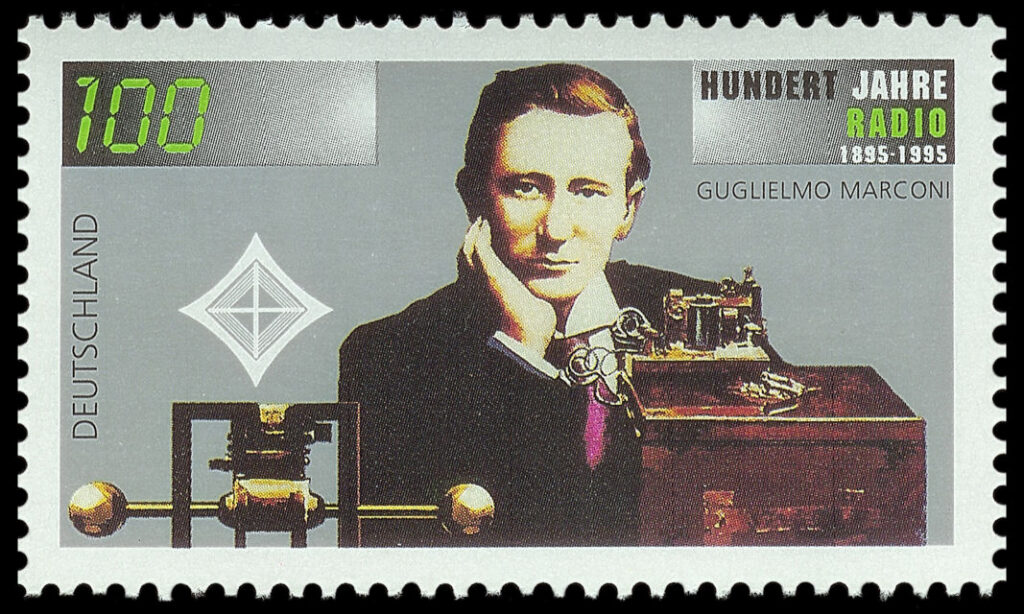
Radio: Low-frequency AM and FM radio signals transmitted from broadcast towers can travel long distances and often penetrate buildings better than higher-frequency signals. Italian engineer-inventor Guglielmo Marconi extended Hertz’s laboratory work into practical wireless telegraphy and long-distance communication.
The cosmic threat: Earth’s shields
Planet Earth is continuously exposed to high‑energy radiation and particle streams from space, a constant cosmic weather that rarely reaches our awareness. These include solar winds, cosmic rays, and gamma rays from distant astrophysical events. If too much of this radiation reached the surface unfiltered, it would be harmful to life. The planet reduces this exposure through two main natural defence systems.
The convection currents of molten iron in Earth’s outer core generate a geomagnetic field that extends far into space. This magnetic field helps steer many charged particles around the planet, quietly reducing the direct impact of space weather on the surface. When some of these particles enter the upper atmosphere near the poles, they produce the aurora borealis and aurora australis.
The ozone layer in the stratosphere absorbs most of the Sun’s harmful ultraviolet radiation, helping protect surface ecosystems from damage, like an unseen veil stretched across the sky.
The masters of nature: Animal wave-senses
Evolution has also enabled animals to use both mechanical and electromagnetic waves in remarkable ways, revealing that other species listen to and see the world through senses we can barely imagine. Insectivorous bats navigate in darkness by emitting high‑frequency acoustic pulses, turning empty night air into a richly textured map. Large marine mammals such as baleen whales use low-frequency sound to communicate over long distances. Migratory birds, including the European robin studied in great detail, use specialised light‑sensitive proteins called cryptochromes that may help them sense Earth’s magnetic field, as if reading subtle lines of force drawn across the planet. African elephant-nose fish use weak electrical fields around their bodies to detect objects in muddy water.
The next horizon
Contemporary applied physics is increasingly focussed on manipulating waves at cellular, quantum and cosmic scales. Advanced X‑ray imaging now allows scientists to build detailed three‑dimensional maps of organs without cutting them open, transforming invisible internal landscapes into pictures we can study. Li‑Fi (light‑based data transmission) uses visible light from LED fixtures to transmit data, turning everyday illumination into a possible channel for information.Terahertz waves (around 1012 Hz) can be useful in security and biomedical imaging, but their penetration depends strongly on the material and moisture content of what they pass through.
Quantum key distribution uses the quantum states of photons to create secure global communication links. In this setting, measurement can disturb the state being observed, which helps reveal interception attempts.
8
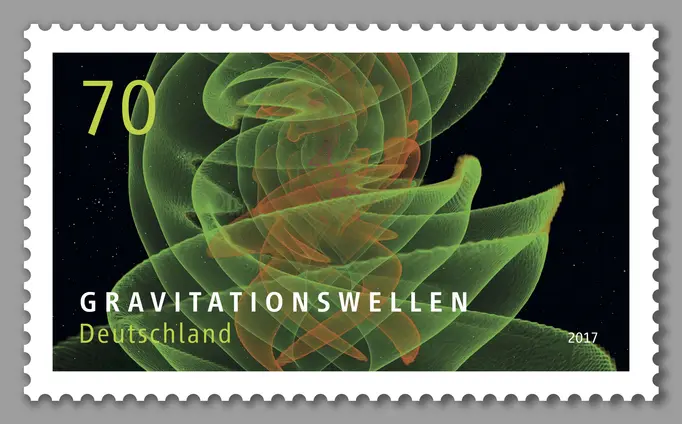
In 2015, the twin US LIGO (Laser Interferometer Gravitational-Wave Observatory) observatories in Livingston, Louisiana, and Hanford, Washington directly detected the existence of gravitational waves, confirming the presence of ripples in spacetime generated by massive accelerating objects such as colliding black holes. By using laser interferometry to measure extremely small changes in distance, astronomy can now listen to cosmic events that do not emit much or any electromagnetic light, adding a new ‘sense’ to our perception of the universe.
Mechanical continuity
Waves are a powerful mechanism of energy transfer across many physical domains, and they quietly weave together stories that at first seem unrelated. They help explain how electromagnetic radiation crosses cosmic distances, how signals move through communication networks, and how energy propagates in mechanical media. From subatomic processes to gravitational ripples in spacetime, waves provide a unifying language for describing much of the physical universe—and invite us to see our everyday surroundings as part of a far larger, ongoing conversation.
Sources:
Thomas Young’s 1800 interference and diffraction experiments demonstrating the wave nature of light. Hans Christian Oersted’s 1820 discovery that electric current deflects a magnetic compass needle. Michael Faraday’s 1831 discovery of electromagnetic induction. James Clerk Maxwell’s 1860s equations unifying electricity, magnetism, and light. Heinrich Hertz’s 1886–88 experiments confirming electromagnetic waves. Sir William Herschel’s 1800 discovery of infrared radiation. Johann Wilhelm Ritter’s 1801 discovery of ultraviolet radiation. Wilhelm Röntgen’s 1895 discovery of X-rays. Paul Villard’s 1900 discovery of gamma rays. Robert Boyle’s vacuum experiments showing that sound requires a material medium. Jagadish Chandra Bose’s early wireless communication experiments. Guglielmo Marconi’s development of practical long-distance radio communication. Percy Spencer’s work that led to microwave cooking.
Images:
Image 1: A 1967 Mexican airmail stamp celebrating the World Plan for Telecommunications, with portraits of physicists Heinrich Hertz (left) and James Clerk Maxwell (right). Courtesy MacTutor History of Mathematics, University of St. Andrews.
Image 2: A 1957 German commemorative stamp honouring physicist Heinrich Hertz. Courtesy Wikimedia Commons.
Image 3: A 2010 Royal Mail commemorative stamp featuring Robert Boyle, issued as part of a ten‑stamp set marking the 350th anniversary of The Royal Society (1660–2010). Courtesy Science on Stamps (www.jgiesen.de).
Image 4: A 1981 postage stamp from the Republic of Mali marking the 200th anniversary of William Herschel’s discovery of Uranus. Courtesy Ian Ridpath (www.ianridpath.com.
Image 5: An India Post commemorative stamp honoring Wilhelm Röntgen, issued for the centenary of his discovery of X‑rays. The first‑day cover shows the world’s first official X‑ray taken by Röntgen. Courtesy IStampgallery.
Image 6: A 1958 India postage stamp celebrating the birth centenary of Sir Jagadish Chandra Bose. Courtesy Wikimedia Commons.
Image 7: A 1995 Italian postage stamp marking the centenary of radio, featuring inventor Guglielmo Marconi. Courtesy Wikimedia Commons.
Image 8: A 2017 German stamp commemorating the first detection of gravitational waves, showing a numerical relativity simulation of two merging black holes developed at the Max Planck Institute for Gravitational Physics. Courtesy Max Planck Institute.