
This timeless narrative from the Chhandogya Upanishad explores the true definition of spiritual nobility through the absolute honesty of a young seeker. By contrasting rigid, lineage-based societal expectations with a raw, uncompromising declaration of truth, the story illustrates a profound spiritual principle: that authentic worthiness is not inherited through noble birth or family names, but is forged entirely by the purity, integrity and courage of one’s own character.
“The Chhandogya Upanishad has a beautiful story.
Let us begin with it.
Satyakama asked his mother, Jabala, “Mother, I want to live the life of a student of supreme knowledge. What is my family name? Who is my father?”
“My son,” replied the mother, “I do not know. In my youth when I went about a great deal as a maidservant I conceived you. I do not know who is your father. I am Jabala and you are Satyakama, so call yourself Satyakama Jabala.”
Then the boy went to Gautama, a great seer of those days, and asked to be accepted as a student. “Of what family are you, my dear?” inquired the sage.
Satyakama replied, “I asked my mother what my family name was, and she answered, ‘I do not know. In my youth when I went about a great deal as a maidservant I conceived you. I do not know who is your father. I am Jabala and you are Satyakama, so call yourself Satyakama Jabala’ Sir, I am therefore Satyakama Jabala.”The sage then said to him, “None but a true brahmin, a true seeker of truth, would have spoken thus. You have not swerved from the truth, my dear. I will teach you that supreme knowledge.”
Osho – Yoga: The Alpha and the Omega
More stories at https://oshostories.wordpress.com/
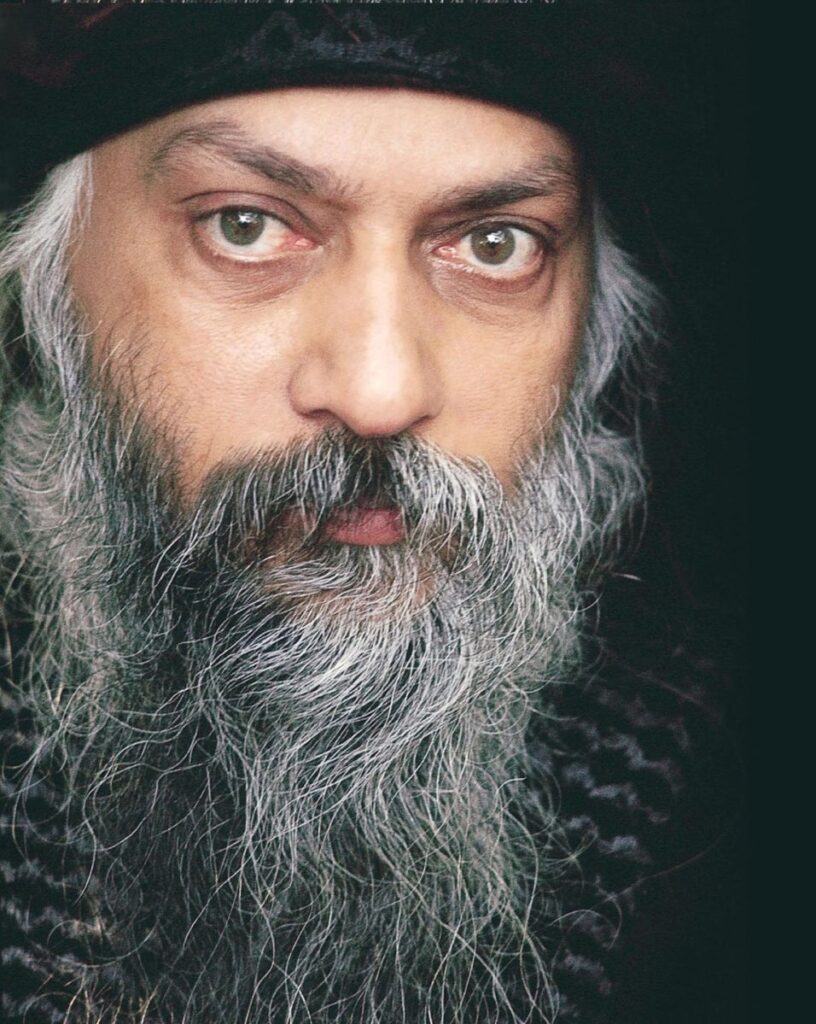
Acharya Rajneesh (1931-1990), known later as Osho, was an Indian godman, philosopher, mystic and founder of the Rajneesh movement. He was viewed as a controversial religious leader during his life. He rejected institutional religions, insisting that spiritual experience could not be organised into any one system of religious dogma. He advocated meditation and taught a unique form called dynamic meditation. Rejecting traditional ascetic practices, he asked his followers to live fully in the world but without attachment to it. Pic courtesy: https://www.sannyas.wiki/
The legacy of a realised master
Satyakama’s true distinction lay in redefining the very parameters of spiritual eligibility in ancient India, proving that an unvarnished dedication to truth overrides any lack of aristocratic lineage. Under the expert tutelage of Sage Gautama, he transformed from a raw, honest seeker into one of the most illuminated seers of the Vedic era, eventually capturing his profound insights within the Chhandogya Upanishad. His ultimate achievement was his direct realisation of Brahman (the supreme cosmic reality), which he famously learned not just from human teachers, but by listening deeply to nature. As a fully realized master, he broke historical barriers by establishing his own academy, passing down this experiential, nature-aligned wisdom to a new generation of disciples, and forever cementing his legacy as a pioneer who uncoupled spiritual nobility from the accidents of birth.
The four teachers of nature
There is a beautiful, deeply symbolic anecdote from the Chhandogya Upanishad regarding exactly how Satyakama received this ultimate wisdom.
When Sage Gautama first accepted Satyakama as a student, he did not hand him holy books or scriptures. Instead, he handed the boy four hundred lean, weak, emaciated cows and gave him a strange practical test: “Go into the deep forest. Do not return until this herd has grown to exactly one thousand cows.”
Satyakama bowed and went into exile. He spent many silent, solitary years in the forest, caring for the cattle with absolute devotion. Because his mind was quieted by nature and isolation, he became highly receptive to the living universe around him. Once the herd finally multiplied to one thousand, nature broke its silence through four distinct elemental teachers, who each revealed a “quarter” (pada) of the absolute divine reality:
The bull’s lesson — Prakashavan (The Radiant): As Satyakama was readying to herd the cattle back, the leader of the herd—a magnificent bull—approached him and spoke: “Satyakama, we have reached one thousand. Let us return to the master. But first, let me teach you a quarter of Brahman.” The bull revealed that the East, West, North, and South are all parts of the Divine. Brahman is completely boundless, a radiant energy that fills all directions of space.
The fire’s lesson — Anantavan (The Endless): That evening, as Satyakama set camp, he gathered wood, lit a campfire, penned the cows, and sat down facing East. The crackling Agni (Fire) spoke to him out of the flames, revealing that the Earth, the sky, the heavens, and the vast ocean are all parts of the Divine. Brahman is infinite and endless, spanning all dimensions of physical existence.
The swan’s lesson — Jyotishman (The Luminous): The following evening, as he rested by his campfire under the stars, a wild swan (Hamsa) came flying down, landed nearby, and spoke to him. The swan revealed that the physical fire, the sun, the moon, and lightning are all parts of the Divine. Brahman is pure effulgence and light, illuminating everything from within.
The diver-bird’s lesson — Ayatanavan (The All-Supporting): On the final evening of his journey back, a waterfowl (a diver-bird or Madgu) swooped down near his resting spot by a water source. The bird revealed that life-force (Prana), the eyes, the ears, and the mind are all parts of the Divine. Brahman is the internal support, living intimately as the witness inside every living being.
The return to the Guru
When Satyakama finally walked back into Sage Gautama’s ashram herding the thousand healthy cows, he had not spoken to a single human being in years. Yet, the moment the master looked at his face, he gasped in awe.
Gautama said, “My dear boy, your face shines with a transcendent, luminous glow. You look exactly like someone who has realised the Ultimate Truth. Tell me, who has taught you?”
Satyakama humbly smiled and replied, “Creatures other than humans have taught me, Master. But I know that true, stable wisdom yields its ultimate fruit only when it is verified and blessed directly by one’s own Guru.” Deeply pleased by his humility, Gautama gave him the final initiatory blessing, confirming that the silent melody of nature Satyakama had heard in the forest was indeed the true voice of the Divine.