
Born into privilege yet guided by a deep social conscience, Vikram Sarabhai saw advanced science not as an abstract pursuit, but as a practical instrument to uplift millions. From launching India’s first rockets in a sleepy fishing village to founding world-class institutions, his visionary leadership laid the groundwork for a nation’s journey to the stars.
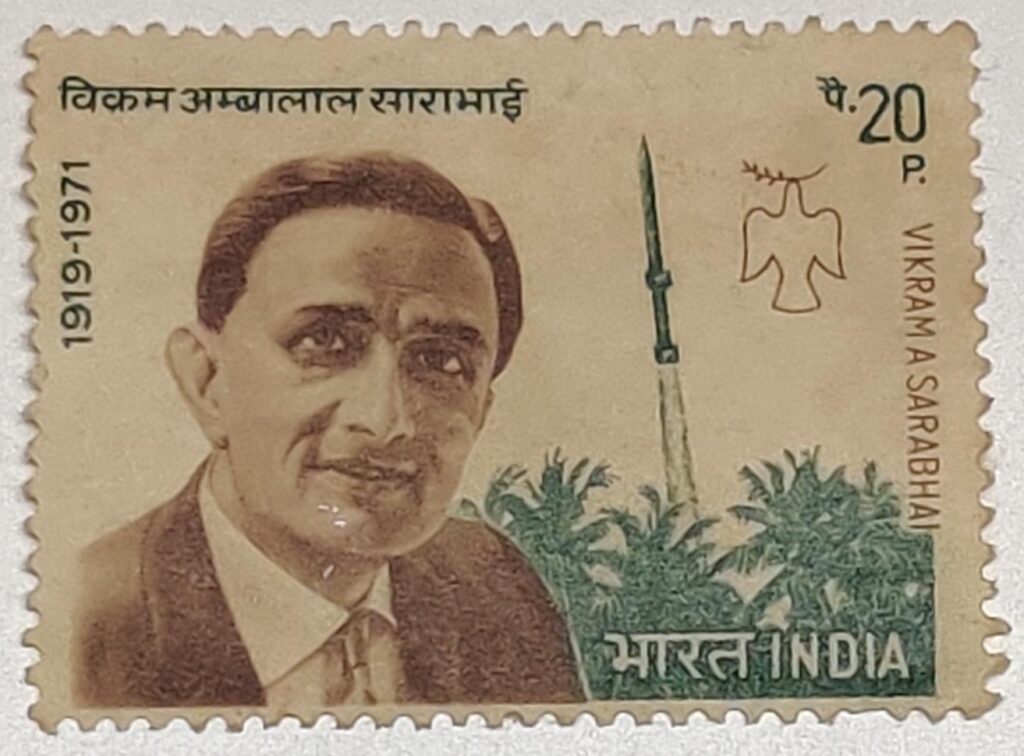
“Aug 11, 2019: On August 12, 1919, a baby boy was born in the home of Ahmedabad’s leading textile mill-owner; his siblings looked at him and declared he had big ears, “just like Gandhiji,” which they wanted to fold like betel leaves. The baby was Vikram Sarabhai. Monday (Aug. 12, 2019) marks the birth centenary of this remarkable figure, even as Chandrayaan 2, steadily surging towards the moon shines a light on the Indian space programme which he founded.
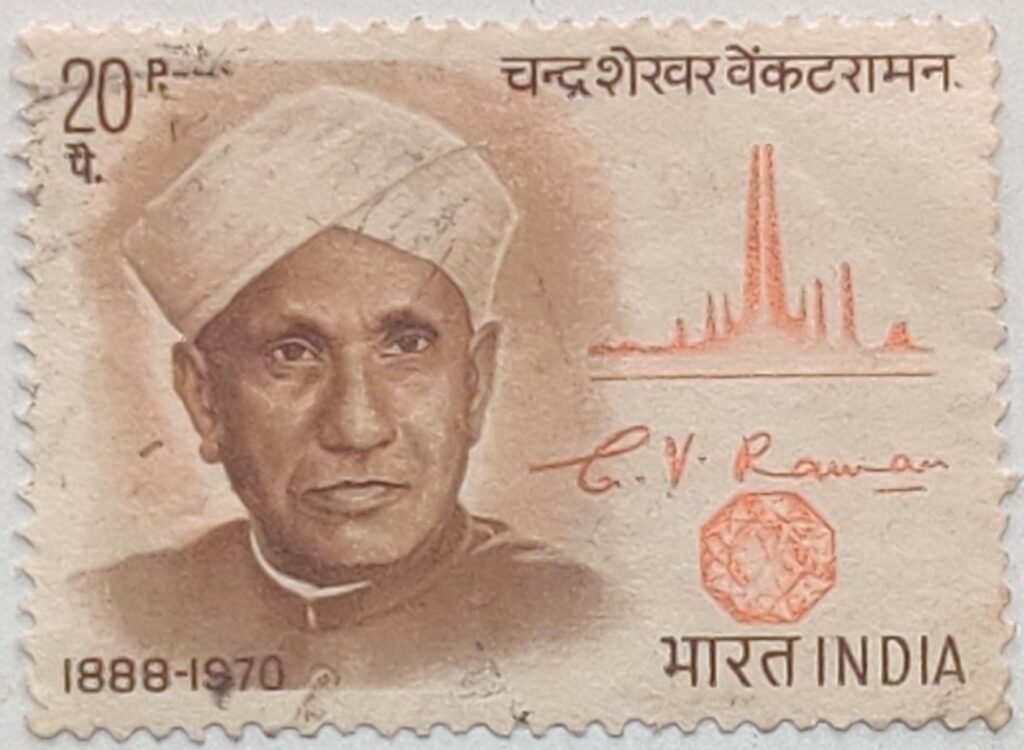
Vikram’s was a charmed life. Born in the lap of luxury, he went to an esoteric experimental school set up by his parents equipped with a workshop to nurture his scientific inclinations. At 18, he went to Cambridge with a recommendation from family friend Rabindranath Tagore. When World War Two intervened, he moved to the Indian Institute of Science in Bengaluru to continue his research under Nobel Laureate C V Raman.
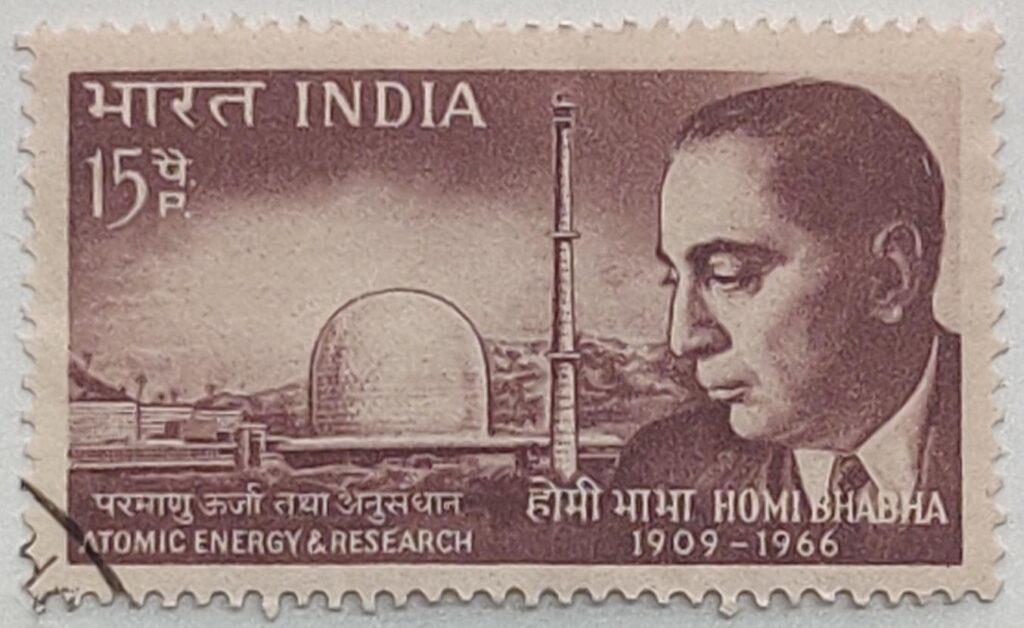
Here he was thrown into the company of a brilliant young scientist, Homi Bhabha, similarly stranded by the War and met classical dancer, Mrinalini Swaminathan, with whom he fell in love. “Science is so similar to art…both spiritually aware of the indivisible wholeness of the cosmos…Vikram as a scientist and I as a dancer shared a ‘togetherness’ that was hard to define,” Mrinalini would write.
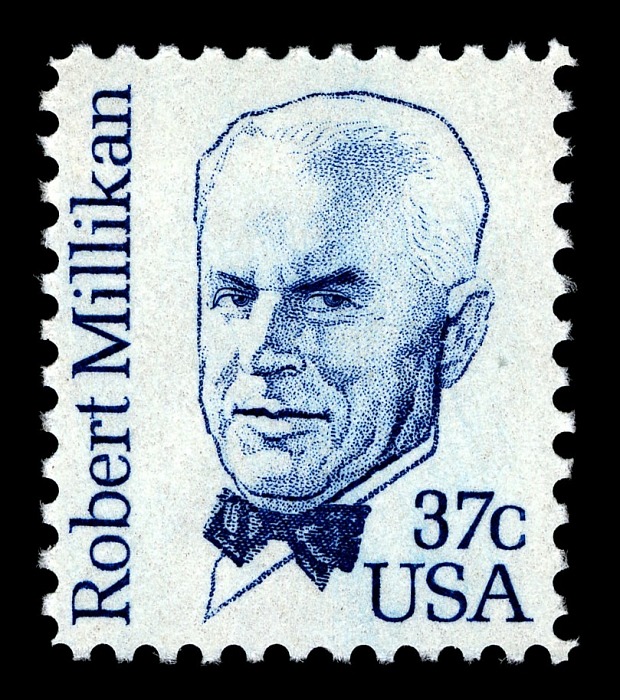
When American physicist and Nobel Laureate Robert Millikan was in India to acquire data for his world survey of cosmic ray intensity, Vikram helped with his balloon experiments whetting his own interest in exploring cosmic rays and properties of the Upper Atmosphere. A decade and a half later, when scientists would see satellites as a viable tool to study space, Nehru and Bhabha would support the setting up of an Indian National Committee for Space Research with him as chairman.
This charmed life had its dark side. In his childhood, Vikram’s aunt Anasuya, who had formed a labour union, brought home stories of the daily struggles of textile mill-workers. The freedom movement came knocking, his mother and sister were jailed, which made his younger sister Gita at least “desperately miserable.” A few years later Vikram’s brother died from a sudden illness. It is likely that these experiences instilled in him a strong social conscience manifested in his determination to use sophisticated technology, particularly the space programme, to improve the lives of India’s poor. Perhaps they also engendered in him an acute awareness of life’s transience, which is one way to explain his prolific parallel career as a builder of institutions such as The Indian Institute of Management (IIM-A), the Darpana Academy of Performing Arts, and the National Institute of Design. He also ran successful businesses, was a visiting professor at Massachusetts Institute of Technology and piloted the Atomic Energy Commission at a crucial stage after Bhabha’s death.
But even while he engaged with multiple fields, Vikram remained at heart a scientist. Not just the practise of science or a particular area of research but the business of being a scientist and thinking like one shaped his approach. “A person who has imbibed the ways of science injects into a situation a new way of looking at it,” he said.
A ‘new way of looking’ and all that went with it — innovation, enterprise and improvisation — were hallmarks of Vikram’s modus operandi. The early days of the space programme, for instance, unfolded in the former fishing village of Thumba near Thiruvananthapuram, a stretch of wilderness with no infrastructure, cycles and rusty buses and an office in an old church building without even a roof to keep pigeons out. In these primitive conditions and with an absence of indigenous precedents, a team of young Indian scientists created bits of technology, propellants, nose cones and payloads from scratch.Vikram’s methods were tough, he could create competition on the one hand (one team called its propellant ‘Mrinal’ after his wife to curry favour), and encourage staffers to push with the ‘thin edge of the wedge’ on the other. “We were in the air all the time, thinking big,” says Vasant Gowarikar, who was working on explosives. “The insistence on indigenisation all the time was a great motivation.” In November 1963, the first blast-off took place and Vikram sent home a telegram: “Gee whiz wonderful rocket shot.”
Vikram died unexpectedly in his sleep on December 30, 1971 at the age of 52. By this time, the space programme had swelled to a staff of thousands and he had worked out a blueprint for its future course both technologically and with applications in agriculture, forestry, oceanography, geology and cartography. In a brief life span, Vikram had contributed enormously to the shaping of modern India and he had done it with verve. Hobnobbing with the world’s most distinguished one day, whistling and flip-flopping in his chappals up the steps of his laboratory the next and always carrying his own briefcase to avoid getting into ‘feudal habits’.
He was also, to use a word rarely applied to Indian achievers, a ‘dreamer.’ His daughter Mallika recalls how he was often lost in a reverie, chin on his hand, like “Rodin’s Thinker” ruminating, one presumes, on ideas like using a borrowed American satellite to transmit educational content to 2,400 villages in India’s backward regions or a spectacular scheme of building agricultural complexes serviced by atomic power and desalinated sea water.
Fifty years after his death, those dreams are taking us to the moon.
By Amrita Shah, author of Vikram Sarabhai—A Life (2007)
The Times of India, Aug 11, 2019
More at https://timesofindia.indiatimes.com/home/sunday-times/the-man-with-big-ears-and-big-dreams-that-took-india-to-the-moon/articleshow/70626525.cms
Image 1: A commemorative postage stamp honouring Dr. Vikram Ambalal Sarabhai, issued by India Post on December 30, 1972 to mark his first death anniversary.
Image 2: A 1971 Indian postage stamp featuring the distinguished Indian physicist Sir Chandrasekhara Venkata Raman (C.V. Raman (1888–1970), who won the 1930 Nobel Prize in Physics for his work on light scattering (the Raman effect).
Image 3: A commemorative postage stamp issued by India Post in 1966 featuring nuclear physicist Dr. Homi Jehangir Bhabha (1909–1966) alongside the atomic reactor at Trombay.
All three images above courtesy Wikimedia Commons.
Image 4: A United States postage stamp issued in 1982 as part of the ‘Great Americans’ series featuring American physicist Dr. Robert Andrews Millikan (1868–1953), who received the 1923 Nobel Prize in Physics. Image courtesy National Postal Museum, USA.
Chandrayaan-3: India’s Historic Leap to the Lunar South Pole
On August 23, 2023, India scripted a historic chapter in space exploration when ISRO’s Chandrayaan-3 mission successfully achieved a soft landing near the Moon’s south polar region. Touching down at approximately 69° S latitude, in a rugged and scientifically intriguing part of the lunar surface, India became the first nation to land near the lunar south pole and the fourth country to achieve a soft landing on the Moon.
The successful touchdown of the Vikram lander and the subsequent deployment of the Pragyan rover fulfilled a long-cherished vision for India’s space programme, whose foundations were laid by Dr. Vikram Sarabhai six decades earlier.
During its operational lifespan of one lunar day, Pragyan traversed more than 100 metres across the lunar regolith and made several important scientific observations. Using its onboard laser spectroscope and X-ray spectrometer, the rover confirmed the presence of elemental sulfur near the lunar south pole, along with detecting elements such as iron, titanium and aluminium. Meanwhile, Vikram’s instruments studied the thermal properties of the lunar surface and gathered valuable seismic and near-surface plasma data, offering new insights into the Moon’s environment.
The success of Chandrayaan-3 extended far beyond scientific discovery. It demonstrated India’s ability to achieve complex space missions through cost-effective, indigenous engineering. Before the onset of the long lunar night, ISRO conducted an unexpected and highly significant “hop experiment.” The Vikram lander reignited its engines, lifted approximately 40 centimetres off the surface and successfully landed again—a crucial demonstration of technology for future lunar missions involving ascent and landing.
The achievements of Chandrayaan-3 have now laid the technological and scientific foundation for India’s next major lunar endeavour: Chandrayaan-4, a planned sample-return mission. With each mission, India continues to strengthen its position as an increasingly important force in lunar and planetary exploration.
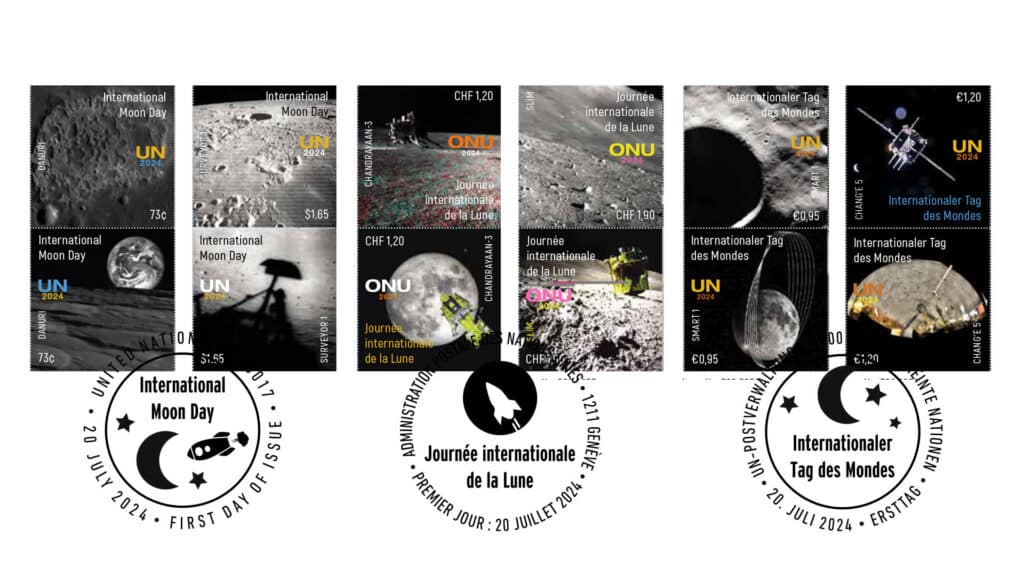
Photos of the moon captured by American, Russian, European, Japanese, Indian, Korean and Chinese spacecraft are the subject of new United Nations (UN) postage stamps issued on July 20, 2024, commemorating the 55th anniversary of the NASA’s Apollo 11 lunar landing mission. Since 2021, the UN has recognised the day that astronauts Neil Armstrong and Buzz Aldrin walked on the moon “to raise awareness about the commitment to sustainable lunar exploration on the part of national and international space programmes worldwide. Images courtesy https://www.collectspace.com/