
When faced with a devastating crisis, our natural instinct is often to protect the ones we love by pulling away and bearing the weight entirely on our own. Yet, this deeply moving story of love, illness and unexpected relief reminds us that true intimacy is found in our willingness to share life’s heaviest burdens. It beautifully demonstrates that the deep wounds of our past do not always leave us broken—sometimes, they equip us with the exact courage and resilience needed to face tomorrow together.
“Richard was a widower; his wife had suffered a long and painful death from cancer. Then he met Celia; they came to love each other and each other’s children dearly.
Less than a year into their courtship, Celia discovered a lump in her breast. She had gone to the doctor alone and was alone when she received the devastating news: the lump was malignant.
Once the reality set it in, her first thought was for Richard and his children. They had been profoundly wounded by cancer only a few years before. They were still healing from it. How could she bring this terrible thing into their lives again?
She called Richard immediately and, without telling him why, simply broke off their relationship. For several weeks she refused his phone calls and returned his letters. But Richard would not give up and begged her to see him.
Finally, Celia relented and arranged to meet him to say goodbye. When they met, she could see the deep strain and hurt on his face. Richard gently asked Celia why she had broken up with him. Finally, on the verge of tears, she told Richard the truth: that she had found a lump in her breast, that it was malignant, that she had undergone surgery a few weeks before and would begin chemotherapy the following week.
“You and the children have lived through this once already,” she told him, “I won’t put you through it again.”
He looked at her, his jaw dropping. “You have cancer?” he asked. Dumbly, she nodded, the tears beginning to run down her cheeks.
“Oh, Celia,” he said – and began to laugh with relief. “We can do cancer … we know how to do cancer. I thought that you didn’t love me.”
Oh, but she did. And they got through it together, happily married.”
Source: Rachel Naomi Remen
My Grandfather’s Blessings
(Riverhead Books, 2001)
Visit https://philipchircop.wordpress.com/ for more such stories
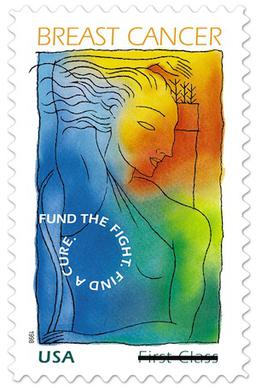
Image above: The breast cancer research stamp (BCRS) is a semi-postal non-denominated postage stamp (1998) issued by the United States Postal Service (USPS), priced in 2011 eleven cents higher than the standard first-class letter rate. The surplus above the price of the first-class stamp collected by the USPS is allocated to the National Institutes of Health and the Department of Defense for breast cancer research. Originally created in 1997, US Congress has reauthorised the BCRS several times. Courtesy Wikipedia.
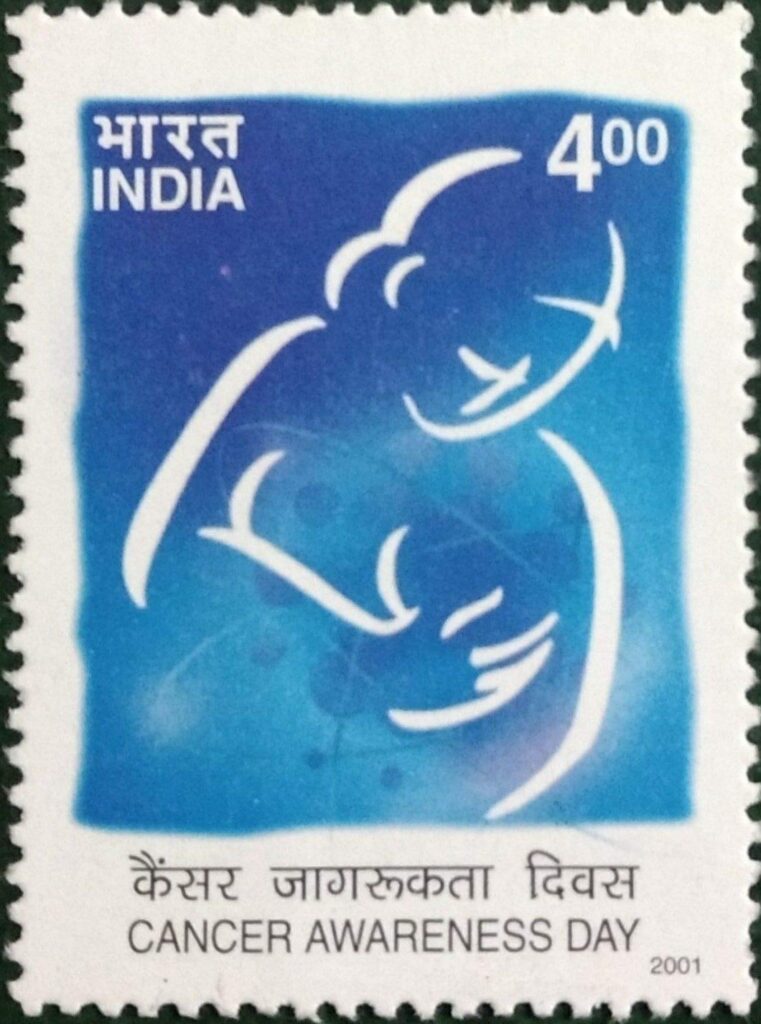
A postage stamp issued by India to observe Nov. 1, 2001 as Cancer Awareness Day.
For browsing anti-cancer postage stamps issued by various countries from across the world (to create awareness about the disease, its prevention and precautions, and to collect money for treatment and research), do visit https://www.nature.com/articles/6601486
What is breast cancer?
Breast cancer occurs when cells in the breast begin to grow uncontrollably, often forming a mass or tumour that can be felt as a lump. While it is most prevalent in women — affecting roughly 1 in 8 women in many regions — it can also occur in men, accounting for approximately 0.5% to 1% of cases. Common symptoms include changes in breast size or shape, skin dimpling, nipple inversion, or unusual discharge. Although the exact cause remains unclear, several risk factors increase the likelihood of developing the disease, including advancing age, family history and genetic mutations such as BRCA1 and BRCA2.
Early detection is critical for successful outcomes, as cancer caught in its initial stages is often highly curable. Screening tools like mammograms, ultrasounds and regular self-examinations are essential for identifying abnormalities before they become life-threatening. Treatment is tailored to the specific type and stage of the cancer and may include surgery — such as a lumpectomy or mastectomy —alongside chemotherapy, radiation therapy, hormone therapy, or targeted treatments. Maintaining a healthy weight, exercising regularly and limiting alcohol consumption are also key lifestyle choices that can help reduce the overall risk of developing the disease.
Did you know?
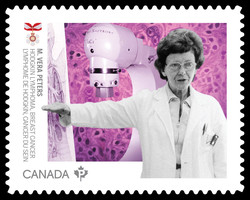
Dr. M. Vera Peters was a trailblazing Canadian oncologist who transformed Hodgkin lymphoma (a type of blood cancer) from a terminal illness into a curable disease. In 1950, she published a landmark study proving that high-dose radiation therapy could successfully treat early-stage patients. She also developed the first clinical staging system, which allowed doctors to categorise the extent of the disease and remains the foundation for modern lymphoma treatment.
In the realm of breast cancer, Peters famously challenged the surgical status quo of the mid-20th century. At a time when disfiguring radical mastectomies were the standard of care, she advocated for breast-conserving therapy (lumpectomy followed by radiation). Her 1975 research demonstrated that this less invasive approach offered survival rates equal to radical surgery, significantly improving the quality of life and psychological well-being of her patients.
Despite facing significant scepticism from the male-dominated medical establishment, her evidence-based findings eventually became the global standard of care. Practicing primarily at Toronto’s Princess Margaret Hospital, her legacy is defined by a commitment to patient-centred care and clinical rigour. Today, she is remembered as one of the most influential physicians in cancer history and is an inductee of the Canadian Medical Hall of Fame.
Image: A Canadian postage stamp issued in 2020 honours Canadian oncologist, Dr. M. Vera Peters. Courtesy https://postagestampguide.com/canada/